
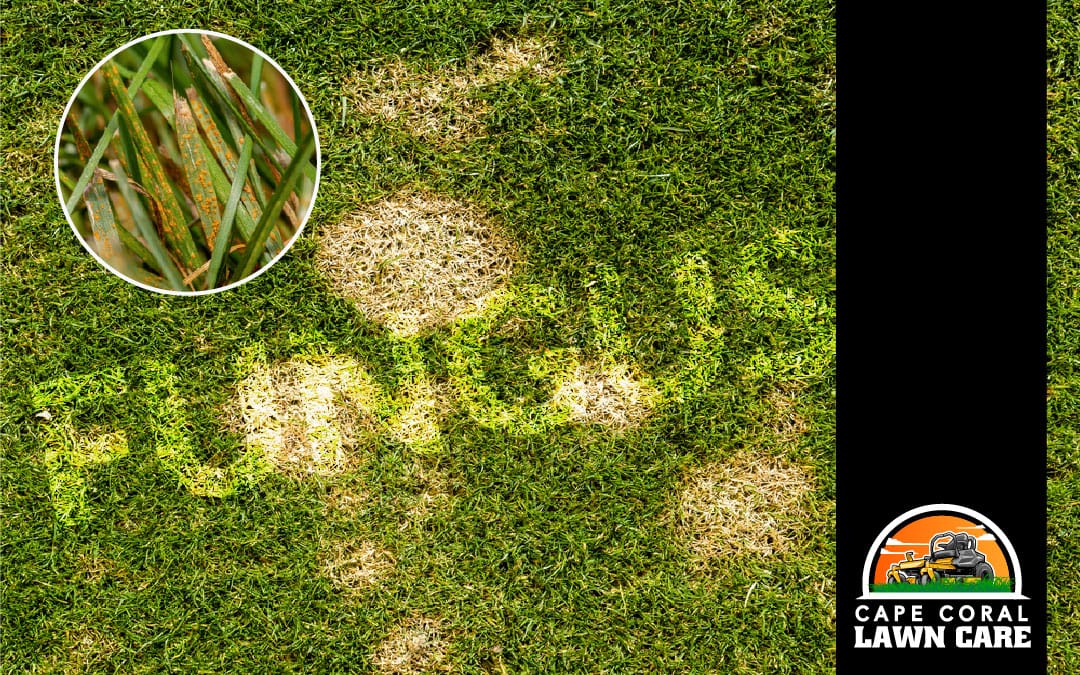
Most Florida homeowners take pride in a lush, green lawn–-but when brown patches or thinning grass suddenly appear, it can be frustrating trying to figure out what went wrong.
In many cases, the culprit isn’t pests or drought– it’s lawn fungus. In Cape Coral’s warm, humid climate, fungal issues can develop quickly and spread before you even realize what’s happening.
The good news is that once you know what to look for, you can take action early. This guide will help you identify the signs, understand why fungus develops, and apply practical steps to prevent long-term damage to your lawn.
What Is Lawn Fungus and Why Does It Happen?
Lawn fungus refers to a group of fungal lawn diseases that affect grass when environmental conditions allow fungal spores to grow and spread. These spores are naturally present in your lawn’s soil at all times– but they only become a problem when moisture, heat, and humidity create the ideal conditions for growth.
Florida lawns are especially vulnerable because of:
- High humidity levels
- Frequent rainfall
- Warm temperatures year-round
- Overwatering or poor drainage
When grass stays wet for extended periods, fungus can take hold and begin spreading across your lawn. It often starts in one area and expands outward, especially if the underlying conditions aren’t corrected.
UF/IFAS provides a helpful overview of how these lawn diseases develop and spread in Florida here.
Understanding these environmental triggers is the first step toward effective lawn fungus treatment.
Common Types of Lawn Fungus in Florida
Several types of fungus commonly affect lawns in Cape Coral, and each one behaves a little differently.
Some of the most common include:
- Brown patch fungus – Large circular brown patches that expand quickly, often with a darker outer ring
- Dollar spot – Small, round, light-colored patches that can merge into larger areas
- Rust fungus – Orange or yellow powder on grass blades that rubs off easily
Among these, brown patch fungus is one of the most common issues in Southwest Florida because it thrives in warm, moist conditions.
You can learn more about this specific disease here.
Identifying the specific type of fungus early helps determine the best treatment approach and prevents unnecessary damage.
Signs Your Lawn May Have Fungus
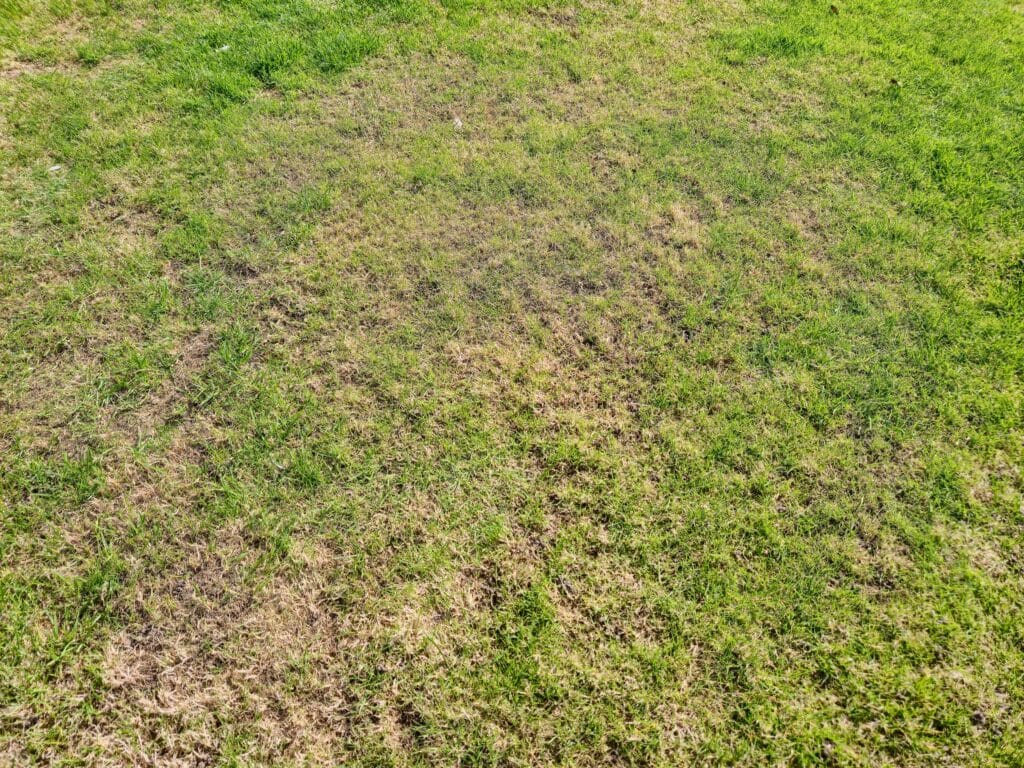
Lawn fungus doesn’t always look the same, but there are clear warning signs homeowners can watch for.
Common signs of lawn fungus include:
- Brown or yellow patches that appear suddenly
- Thinning grass or areas that feel weak underfoot
- Circular rings or irregular spreading shapes
- Powdery residue on grass blades (white, orange, or yellow)
- Areas that remain consistently damp or slimy
What it looks like in real life
In many Cape Coral lawns, fungus shows up first as a small discolored patch that homeowners assume is from drought or pet damage. Over a few days, that patch begins to spread outward, forming a ring or irregular shape.
Another common clue is uneven coloration across the lawn. You might see a mix of green, yellow, and brown within the same area, rather than a uniform decline.
Being able to recognize these early patterns can make the difference between a quick fix and a lawn-wide issue.
Why Lawn Fungus Spreads So Fast
Once fungus appears, it can spread rapidly if conditions remain favorable.
Several factors contribute to this:
- Warm temperatures and humidity allow spores to multiply quickly
- Excess moisture from rain or irrigation keeps grass constantly wet
- Poor airflow traps humidity between grass blades
- Over-fertilization encourages fast but weak growth
- Thatch buildup holds moisture at the soil surface
When these factors combine, fungus can spread across a lawn in just a few days.
Fungus isn’t the only issue that can damage a lawn. Our guide on
6 Big Lawn Care Mistakes You Don’t Want to Make in Southwest Florida
explains other common mistakes that weaken grass and make it more vulnerable to disease.
Step-by-Step: What to Do If You Notice Lawn Fungus
If you suspect fungus in your lawn, taking quick action can stop it from spreading further.
Here’s a simple step-by-step approach:
Step 1: Reduce watering immediately
Avoid watering for a few days and let the lawn dry out. This removes the moisture fungus depends on.
Step 2: Improve airflow
Mow the lawn (at the correct height) and remove any thick or overgrown areas to allow better air circulation.
Step 3: Check for drainage issues
Look for areas where water pools or drains poorly. These spots are often where fungus starts.
Step 4: Remove excess thatch
Thatch holds moisture and can worsen fungal conditions. Light dethatching may help.
Step 5: Monitor the spread
Watch the affected area over several days. If it continues to expand, further treatment may be needed.
Taking these steps early can often stop fungal lawn diseases before they require more aggressive treatment.
The Best Ways to Prevent Lawn Fungus in the Future
Prevention is always easier than treatment when it comes to lawn fungus.
The key is creating an environment where fungus struggles to survive.
Effective prevention strategies include:
- Water deeply but less frequently to avoid constant moisture
- Avoid watering at night, when grass stays wet for too long
- Mow regularly to maintain airflow
- Remove excess thatch and debris
- Use balanced fertilization, avoiding excessive nitrogen
Why soil health matters
Healthy soil plays a major role in preventing fungus. When soil drains properly and supports strong root systems, grass is more resilient to disease.
In Cape Coral, sandy soil can be both a benefit and a challenge. While it drains quickly, it also requires careful nutrient management to keep grass strong.
Maintaining proper soil balance helps reduce the likelihood of recurring fungal problems.
When to Call a Professional for Lawn Fungus Treatment

Some fungal issues can be handled with basic adjustments, but others require expert care.
You should consider professional help if:
- The affected area continues to spread
- Large sections of lawn are damaged
- Grass does not recover after adjustments
- You are unsure what type of fungus is present
Professionals can identify the exact disease and apply targeted lawn fungus treatment solutions that homeowners may not have access to.
Early professional intervention often prevents more extensive damage and speeds up recovery.
Ready to Stop Lawn Fungus Before It Spreads?
Lawn fungus is one of the most common issues Cape Coral homeowners face– but it doesn’t have to take over your yard.
By learning to recognize early warning signs, adjusting watering habits, and maintaining proper lawn care routines, you can prevent fungus from spreading and protect your lawn’s long-term health.
With the right approach, your lawn can stay green, strong, and resilient– even in Florida’s challenging climate.
If you are ready to stop lawn fungus before it damages your lawn, contact our team here at Cape Coral Lawn Care today to schedule a lawn inspection and keep your grass healthy, green, and fungus-free.
FAQs
Q: What causes lawn fungus in Florida?
A: Warm temperatures, high humidity, excess moisture, and poor airflow create ideal conditions for fungal lawn diseases.
Q: What are the first signs of lawn fungus?
A: Brown or yellow patches, circular spots, thinning grass, and discoloration are common early signs.
Q: How do you treat lawn fungus?
A: Reduce watering, improve airflow, remove thatch, and apply targeted treatment if needed.
Q: Can lawn fungus go away on its own?
A: Minor cases may improve, but most require proper care to prevent spreading.