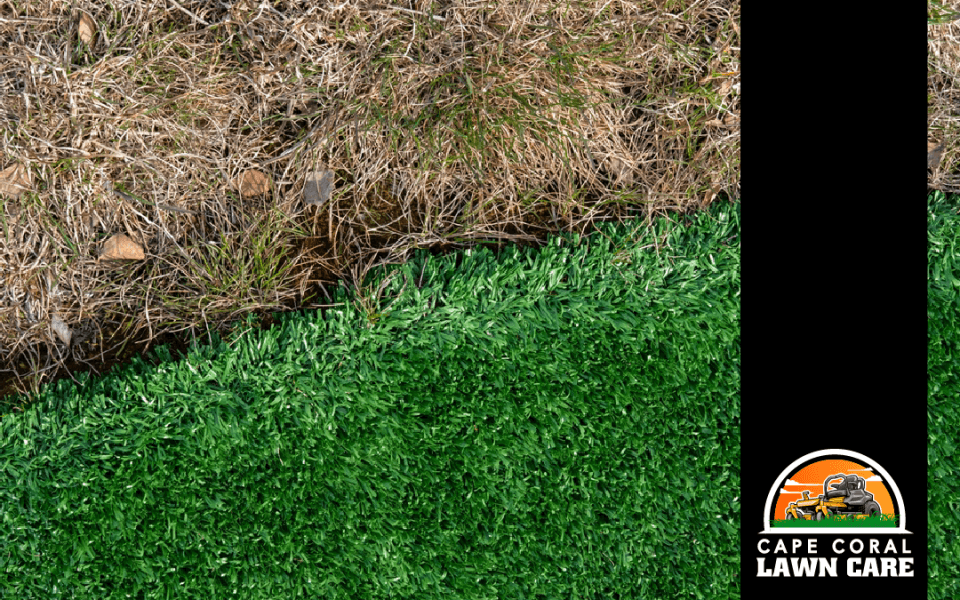
Keeping a lawn green and healthy in Cape Coral’s heat and humidity is a serious challenge. Between sandy soil, intense sun, salty air, and inconsistent rainfall, natural grass needs a lot of care to look its best.
That’s why more and more homeowners are starting to ask: Is synthetic turf vs natural grass the better choice for my Florida lawn?
In this guide, we’ll walk through the key differences between the two– including cost, performance, maintenance, and lifespan– so you can confidently choose the option that makes the most sense for your home, lifestyle, and budget.
Synthetic Turf vs Natural Grass: What’s the Difference?
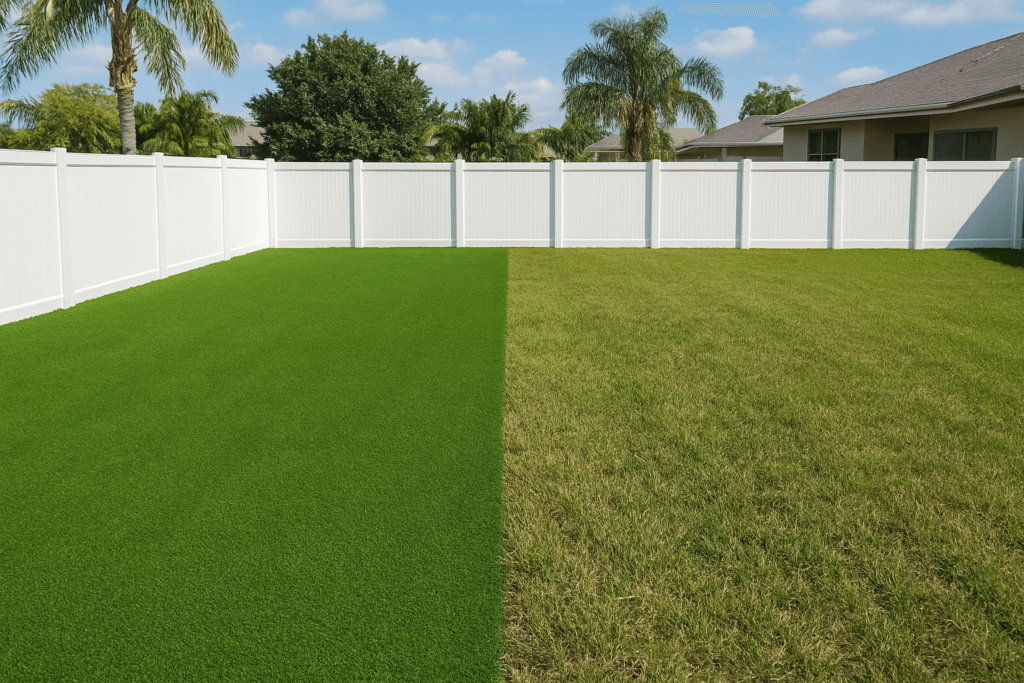
At a glance, high-quality synthetic turf can look a lot like a freshly manicured lawn. But under the surface, it’s a completely different system.
- Synthetic turf is a manufactured product built from fibers, backing, infill, and a drainage layer. It doesn’t grow, doesn’t need water, and doesn’t need mowing.
- Natural grass is a living plant system that depends on healthy soil, proper watering, mowing, and regular fertilization to thrive– especially in Florida’s climate.
When you’re comparing the two, the main decision factors usually come down to:
- Upfront cost vs long-term cost
- Day-to-day and seasonal maintenance
- Longevity and durability
- Environmental considerations
- How they handle Florida sun, storms, and sandy soil
Understanding these differences makes it easier to weigh artificial grass vs real grass for your own yard.
Understanding the Design of Synthetic Turf
Modern synthetic turf is built in layers, and each layer plays an important role in how it looks and performs:
- Fibers: Usually made from polyethylene or polypropylene, shaped and colored to mimic real blades of grass.
- Infill: Sand, rubber, or a blend that helps the blades stand upright and adds cushioning.
- Backing and base: A backing layer secures the fibers, and a compacted base layer underneath supports drainage and stability.
- Drainage perforations: Allow rainwater to pass through quickly instead of pooling on the surface.
- UV protection: Built into the fibers to slow fading and damage from Florida’s intense sun.
According to the Synthetic Turf Council’s overview of why synthetic turf is used in modern landscapes, current turf systems are designed for durability, drainage, and realistic appearance, even in high-heat environments.
Many newer products are also made, at least in part, from recycled materials– which can appeal to homeowners looking for more eco-conscious options.
How Natural Grass Performs in Different Climates
Natural grass behaves very differently from turf, especially in a climate like Cape Coral’s.
Common warm-season grasses like St. Augustine, Bahia, and Zoysia each have strengths and weaknesses:
- St. Augustine:
- PROS: Lush, dense look and tolerance for humidity
- CONS: Prone to chinch bugs, disease, and drought stress
- Bahia:
- PROS: Hardy and drought-tolerant, good for sandy soils,
- CONS: Can appear coarser and less “perfect” than turf
- Zoysia:
- PROS: Thick and carpet-like, handles foot traffic well
- CONS: Slower to establish, more sensitive to shade and improper care
Because Cape Coral has sandy, fast-draining soil, natural lawns often need more careful watering and fertilization to stay healthy. UF/IFAS notes in their guide on best care practices for Florida lawns that warm-season grasses require proper mowing heights, regular feeding, and active pest management– especially in hot, coastal areas.
You’ll also see seasonal changes in color and density with natural grass. It may thin or brown slightly during cool spells, very hot stretches, or after heavy rains. Turf, by contrast, looks essentially the same year-round.
If you’re trying to choose the best grass for hot climates, natural options can absolutely work in Cape Coral– they just require more hands-on maintenance than synthetic turf.
The Pros and Cons of Artificial Turf
Artificial turf can be a great option for homeowners who are tired of fighting brown spots, weeds, and constant mowing. But like any solution, it comes with trade-offs.
Pros of artificial turf:
- Very low maintenance: no mowing, no edging, no weekly irrigation schedule
- Helps conserve water, since it doesn’t need regular watering
- No need for fertilizers, herbicides, or pesticides
- Stays green and uniform throughout the year
- Eliminates muddy spots, bare patches, and many weed issues
- Reduces long-term maintenance costs (no fertilizers, weed-control chemicals, or irrigation).
- Pet- and family-friendly surfaces designed to stand up to active use and pet traffic
Cons of artificial turf:
- Higher upfront cost compared to laying sod or seeding
- Turf can absorb and retain more heat in direct sun
- May need to be rinsed periodically to keep it clean
- Has a defined lifespan and will eventually need replacement (10-20 years)
UF/IFAS outlines several of these factors in its homeowner guide on what to consider before installing synthetic turf, including drainage, heat, and long-term performance.
When you weigh the pros and cons of artificial turf, it often comes down to what you value more: the look and feel of real grass, or the simplicity and consistency of a low-maintenance turf system.
Artificial Grass vs Real Grass: Which Is Actually Easier to Maintain?
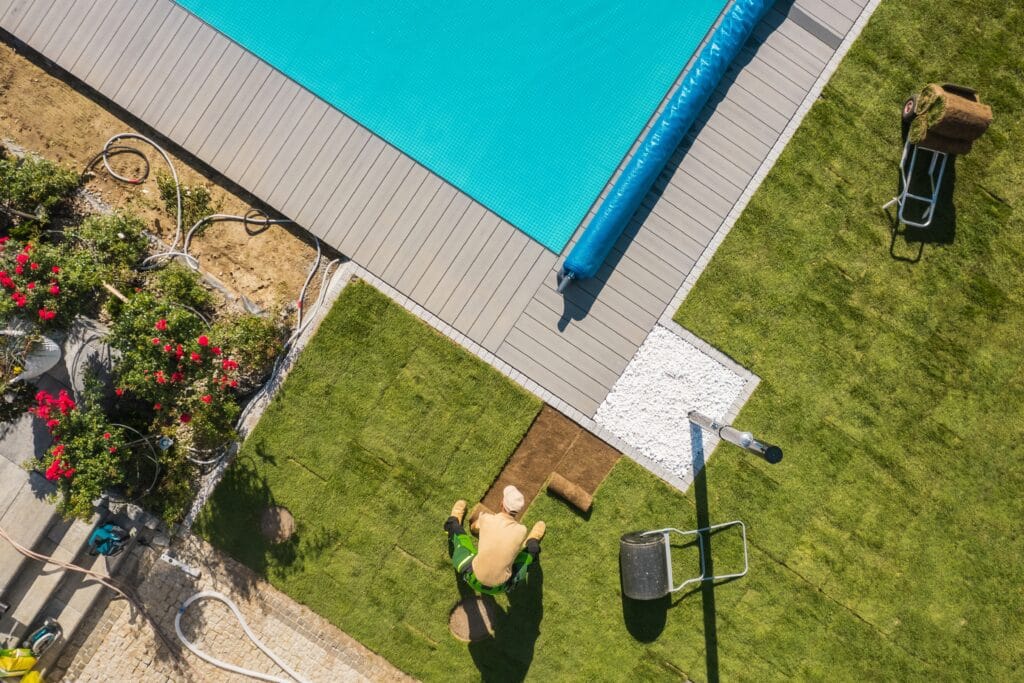
If your main concern is day-to-day upkeep, synthetic turf is almost always easier than natural grass.
Natural lawns typically require:
- Weekly or bi-weekly mowing
- Regular edging and trimming
- Seasonal fertilization and weed control
- Irrigation system monitoring and adjustments
- Periodic aeration and patch repair
Synthetic turf, on the other hand, usually involves:
- Occasional rinsing to remove dust or pet odors
- Brushing or brooming the fibers now and then
- Clearing leaves and debris with a leaf blower or rake
When you compare the two, turf essentially replaces hours of recurring maintenance with a few light tasks throughout the year.
Lifespan and Durability: How Do They Compare?
Durability is another major factor when evaluating the lifespan of artificial turf vs natural grass.
With proper installation and basic care, quality turf systems are often rated to last 15 or more years in residential settings. They’re designed to withstand foot traffic, Florida storms, and active use without developing bare patches or ruts.
Natural grass can last indefinitely, but only if you’re consistently maintaining it– watering correctly, treating pests, addressing disease, fertilizing, and repairing damage. In Cape Coral’s climate, it’s common to see thinning or browning during periods of extreme heat or heavy rainfall if lawns aren’t cared for regularly.
Maintenance Time and Tools
Another practical way to compare synthetic turf and natural grass is to look at what you actually need to own and maintain each one. This gives homeowners a clearer sense of long-term cost, time commitment, and the level of hands-on care each option requires.
Synthetic turf needs very little equipment to stay looking its best. Most homeowners can maintain it with just a few items they likely already own:
- A stiff broom or brush to lift flattened turf fibers
- A hose for occasional rinsing or pet cleanup
- A leaf blower or rake to remove leaves and debris
Natural grass, on the other hand, requires a more extensive toolkit. Keeping a lawn healthy in Cape Coral’s heat and sandy soil often means investing in:
- A lawn mower and trimmer for weekly or bi-weekly cuts
- An irrigation system (plus seasonal adjustments and occasional repairs)
- Fertilizers, weed-control products, and a spreader
- Tools or services for periodic aeration, dethatching, and pest management
When comparing long-term upkeep, this is where the cost difference becomes clearer. Even with the cost of artificial grass installation, many homeowners find that turf can be more affordable over time simply because it eliminates recurring expenses — fuel for mowing, irrigation adjustments, fertilizer purchases, and seasonal treatments.
The Best Grass for Hot Climates: Is Turf the Smarter Choice?
Cape Coral’s climate is tough on lawns. Summers are hot and humid, winter can be dry, and storms can bring heavy rain in short bursts.
Synthetic turf handles these swings in a very predictable way. It won’t die back during a drought, it won’t get waterlogged during a downpour, and it doesn’t need recovery time after foot traffic.
Natural grass, however, has advantages too:
- It stays cooler underfoot than turf in direct sun.
- It can feel more comfortable and “natural” for families who like barefoot time in the yard.
- For those who enjoy gardening and lawn care, it can be satisfying to maintain.
Turf often fits best for:
- Busy, low-maintenance households
- Pet owners who want mud-free play spaces
- High-traffic areas or rental properties
- Small yards or side yards where mowing is a hassle
Natural grass is often a better choice for homeowners who enjoy traditional lawn care and want a living landscape.
Think natural grass sounds like the right fit? Reach out to our team and learn more about our professional lawn care services at Cape Coral Lawn Care for year-round maintenance tailored to your yard.
Heat Resistance and Drainage Factors: In-Depth
Two of the biggest performance differences between turf and natural grass in Cape Coral come down to heat and drainage.
Synthetic turf:
- Uses an engineered base and drainage layer that moves water away quickly, preventing puddles during Florida’s heavy rains.
- Stays consistent even in yards with naturally poor drainage or sandy soil that shifts after storms.
- Can feel warmer in direct sun, though some modern infills and lighter-colored fibers help reduce surface temperature compared to older turf products.
Natural grass:
- Cools naturally through evapotranspiration, making it more comfortable under bare feet on hot days.
- Relies on well-aerated, properly graded soil to drain well — compacted areas or low spots can hold water long after a storm.
- May experience root issues or turf decline when drainage is poor or water repeatedly pools around the base of the grass.
If your yard has ongoing drainage challenges, turf’s engineered base may help– but some properties still benefit from grading and drainage work whether you choose turf or real grass.
Choosing the Right Grass for Your Home and Lifestyle
There’s no single “right” answer for every Cape Coral home. The best choice depends on your priorities.
Synthetic turf may be the better fit if you:
- Want a low-maintenance yard
- Prefer consistent color and appearance
- Don’t want to deal with mowing, fertilizing, or weed control
- Have pets or kids and want a durable play space
Natural grass may be the better fit if you:
- Enjoy gardening and lawn care
- Prefer the feel of real grass underfoot
- Don’t mind regular mowing and maintenance
- Want a living landscape that supports local ecosystems
Even if you choose to stick with natural grass, you don’t have to manage it alone. Cape Coral Lawn Care can help you choose the right grass variety for your property and provide ongoing maintenance so your lawn can handle the heat, storms, and sandy soil.
Let Us Be Your Guide to the Perfect Grass
Deciding between synthetic turf and natural grass in Cape Coral comes down to how you want to spend your time, what you want your yard to look like, and how much maintenance you’re comfortable taking on.
Synthetic turf offers low-maintenance, consistently green results and strong durability (especially in high-traffic or tough-to-maintain areas).
Natural grass offers a cooler, more traditional lawn, but it does require more hands-on care in Florida’s climate.
If you’re leaning toward natural grass and want it to truly thrive– or even if you’re on the fence– we’d love to help.
Let’s figure out if natural or synthetic is the right choice for your lawn. Contact our team here at Cape Coral Lawn Care today to schedule a consultation or routine maintenance and get expert support tailored to your yard.
FAQs
Q: How long does artificial turf last in Florida’s climate?
A: High-quality turf typically lasts 15–20 years in Florida’s climate when properly installed and maintained.
Q: Is synthetic turf safe for pets and kids?
A: Yes. Most modern turf products are non-toxic and designed for pet- and kid-friendly use. If you have specific concerns, you can ask the installer about product certifications.
Q: Does artificial turf drain well during heavy rain?
A: Yes. Most turf systems are installed over a compacted base with a drainage layer and perforated backing. This allows water to flow through and helps prevent standing puddles during Florida’s rainy season.
Q: What’s the biggest advantage of turf in Cape Coral?
A: One of the biggest advantages is its low maintenance. Turf doesn’t need mowing, fertilizing, or regular watering and can help reduce water bills while improving year-round curb appeal.