

Does your lawn look thick and green in one area but thin, patchy, or slow-growing just a few feet away?
That can be frustrating, especially when you feel like you’re giving the whole yard the same care. You mow everything at once, run the sprinklers on the same schedule, and fertilize the lawn evenly. So why does one section look great while another seems determined to struggle?
The answer is usually that different parts of the same yard are growing under different conditions.
An uneven lawn can develop because of differences in sunlight, irrigation coverage, soil compaction, drainage, foot traffic, pests, disease, mowing habits, or even the type of grass growing in that particular area.
Cape Coral’s heat, rainfall, sandy soil, and long growing season can make those differences even more noticeable.
The good news is that uneven grass does not automatically mean your lawn is failing. In many cases, once you figure out what is different about the struggling area, you can make a few targeted changes and help the grass grow more consistently.
In this guide, we’ll walk through the most common causes of uneven grass growth, how to troubleshoot the problem, and what Cape Coral homeowners can do to encourage a healthier, more uniform lawn.
Why Is Your Grass Growing Unevenly?
The first thing to understand is that uneven growth does not always mean something is seriously wrong.
Think about everything that can change across one property.
The front lawn may receive full sun all afternoon, while the side yard sits in shade from the house. One sprinkler head may provide excellent coverage, while another is partially blocked by a shrub. Kids and pets may regularly run through one section but rarely touch another. One corner may drain almost immediately after rain, while a low spot near the driveway stays wet much longer.
Those small differences affect how the grass grows.
Some of the most common factors include:
- Sun exposure
- Shade
- Irrigation coverage
- Soil moisture
- Drainage
- Soil compaction
- Foot traffic
- Grass variety
- Mowing patterns
- Pest activity
- Lawn disease
- Weed pressure
Florida’s environment adds another layer to the problem.
Cape Coral lawns may deal with strong sun, high humidity, periods of heavy rain, dry stretches, and sandy soil that can lose moisture quickly. Those conditions make it especially important to look at the lawn section by section rather than assuming the whole yard needs the exact same treatment.
For example, grass under a large tree may naturally be thinner because it receives less sunlight. Increasing fertilizer in that area probably won’t solve the real problem.
Likewise, a dry-looking patch may not need more irrigation if compacted soil underneath is causing water to run off instead of soak in.
The goal is to figure out what is different about the struggling area before reaching for another lawn product.
Common Causes of Uneven Grass Growth
When you’re trying to diagnose uneven grass growth, start with the basics.
Inconsistent Watering
One of the most common causes is uneven irrigation.
Sprinkler systems do not always distribute water perfectly across the yard. A misaligned nozzle, clogged sprinkler head, low water pressure, or landscaping obstruction can create sections that receive very different amounts of moisture.
One part of the lawn may stay wet.
Another may barely get watered.
Over time, those differences show up in the grass.
UF/IFAS explains in its guide to proper irrigation techniques for healthier turfgrass that Florida’s sandy soils already create challenges because they hold relatively little water. Improper irrigation can leave lawns either overwatered or underwatered, both of which can weaken turf.
Look for:
- Dry spots between sprinkler heads
- Water spraying onto sidewalks instead of grass
- Puddles around certain heads
- One area drying much faster than another
- Sprinklers blocked by shrubs or landscape features
Sometimes fixing uneven grass is as simple as correcting the irrigation pattern.
Compacted Soil
Compaction is another hidden cause.
When soil is repeatedly pressed down by people, pets, equipment, or vehicle traffic, the spaces between soil particles become smaller.
That makes it harder for:
- Water to soak in
- Oxygen to reach roots
- Nutrients to move through the soil
- Roots to grow deeply
Grass growing in compacted areas may remain thin even when the rest of the lawn looks healthy.
High-traffic zones are especially worth checking. Think about pathways between the driveway and backyard, areas where children play, spots where pets repeatedly run, or places where heavy lawn equipment travels.
If a screwdriver is easy to push into healthy soil but difficult to push into the struggling area, compaction may be part of the problem.
Too Much Shade
Sunlight matters more than many homeowners realize.
Even grasses that tolerate partial shade still need enough light to produce energy.
St. Augustinegrass is commonly used in Florida and can handle more shade than some other warm-season grasses, but that does not mean it will thrive in deep shade. Different St. Augustine cultivars also have different shade tolerances.
The Florida St. Augustinegrass guide provided by Seminole County explains that standard cultivars generally perform best when mowed higher, while some dwarf cultivars tolerate somewhat different conditions. You can review more detail in this guide to St. Augustinegrass for Florida lawns.
If grass under a tree canopy stays thin year after year, the issue may simply be insufficient light.
Pruning the canopy may help in some situations, but sometimes the better solution is accepting that traditional turf is not the best plant for that spot.
Mowing Problems
Mowing can also create an uneven appearance.
If the mower deck is not level, one side may cut lower than the other.
Repeatedly mowing in exactly the same direction can also create visible patterns or soil pressure over time.
Cutting grass too short can also place additional stress on already weak areas.
Mowing height matters especially for St. Augustinegrass. Many standard St. Augustine cultivars are commonly maintained around 3.5 to 4 inches, although dwarf cultivars are generally shorter.
If one section is already struggling, scalping it will not help it catch up.
Existing Thin or Damaged Areas
Sometimes uneven growth is the result of an earlier problem.
A pest infestation, fungal disease, drainage issue, or previous drought may have weakened one area of turf.
Even after the original problem is gone, the lawn may take time to fill back in.
Weeds can make the difference even more noticeable.
UF/IFAS notes in its Weed Management Guide for Florida Lawns that weeds often move into openings created by weak turf rather than causing the original void themselves.
That means a thin section filled with weeds may have two issues:
- Something weakened the grass.
- Weeds took advantage of the opening.
Simply killing the weeds will not necessarily restore even growth.
Look at the Pattern Before You Treat the Problem
One of the easiest ways to troubleshoot an uneven lawn is to step back and look at the shape of the problem.
Patterns can reveal useful clues.
A Perfectly Straight Strip
This may point toward:
- Irrigation coverage
- Mower problems
- Fertilizer application
- Sprayer overlap
Nature rarely creates perfectly straight lines, so geometric patterns often suggest equipment or application issues.
A Patch Under a Tree
Shade, root competition, or irrigation obstruction may be involved.
A Low, Soggy Area
Drainage or excess irrigation should be investigated.
A Worn Path
Repeated foot or pet traffic may have compacted the soil.
Expanding Irregular Patches
Pests, disease, or another turf-health problem may be contributing.
Do not assume every patch needs more seed or fertilizer.
The pattern is often your first clue.
How to Fix an Uneven Lawn
Once you have a better idea of what is causing the problem, you can choose the right solution.
This is the most important part of learning how to fix uneven grass.
There is no universal product that fixes every uneven lawn.
If one area is dry because the sprinkler misses it, fertilizer will not help.
If another area is thin because of shade, extra irrigation may actually make things worse.
If compaction is preventing roots from growing, adding seed without addressing the soil may produce disappointing results.
Work through the lawn logically.
Step 1: Compare Healthy and Struggling Areas
Pick one healthy section and one struggling section.
Compare:
- Sunlight
- Soil moisture
- Soil hardness
- Irrigation coverage
- Grass type
- Foot traffic
- Mowing height
- Visible pests
- Weed growth
You are looking for differences in the conditions.
Those clues differences are often more useful than the appearance of the grass itself.
Step 2: Check Irrigation
Turn on one zone at a time.
Watch where the water lands.
Look for heads that:
- Spray too far
- Spray too little
- Are tilted
- Are blocked
- Leak
- Create puddles
- Miss sections completely
A simple catch-can test can also help.
Place several straight-sided containers around the zone, run the irrigation system for a set amount of time, and compare how much water each collects.
If one cup has much more water than another, your lawn may be receiving uneven coverage.
Step 3: Check the Soil
Try pushing a screwdriver into both healthy and weak areas.
Notice whether one area feels significantly harder.
Also check moisture.
Is the soil:
- Bone dry?
- Damp?
- Waterlogged?
- Hard and compacted?
- Loose and sandy?
The solution depends on what you find.
Step 4: Review Your Mowing
Make sure the mower deck is level.
Keep blades sharp.
Avoid cutting the lawn too short, and do not remove more than roughly one-third of the blade in a single mowing.
If you let the grass grow too long, do not suddenly cut it down to your preferred height in one pass. Lower it gradually over multiple mowings.
Step 5: Address the Underlying Issue
Now treat what you actually found.
That might mean:
- Adjusting sprinklers
- Improving drainage
- Aerating compacted soil
- Reducing foot traffic
- Correcting mowing height
- Treating pests
- Addressing disease
- Repairing bare spots
- Reconsidering turf in deep shade
That targeted approach is much more effective than applying the same treatment across the entire yard.
Adjusting Watering and Mowing for More Even Growth
Watering and mowing deserve extra attention because both affect almost every part of Florida lawn care.
Check Sprinkler Coverage Regularly
Sprinkler systems change over time.
Heads shift.
Plants grow and block spray.
Nozzles clog.
Pressure changes.
What worked perfectly six months ago may not be distributing water evenly today.
Walk the yard while the sprinklers are running rather than assuming everything is fine because you hear the system turn on.
Smart irrigation tools can also make it easier to monitor moisture and watering patterns. If you’re interested in how technology is changing routine lawn care, our article on lawn care technology advances covers tools like smart irrigation and lawn-monitoring technology.
Technology is not required for a healthy lawn, but better information can help you spot inconsistent watering before it becomes visible damage.
Match Mowing Height to the Grass
Not all Florida lawns should be cut at exactly the same height.
If you have St. Augustinegrass, identify whether you have a standard or dwarf cultivar before setting the mower unusually low.
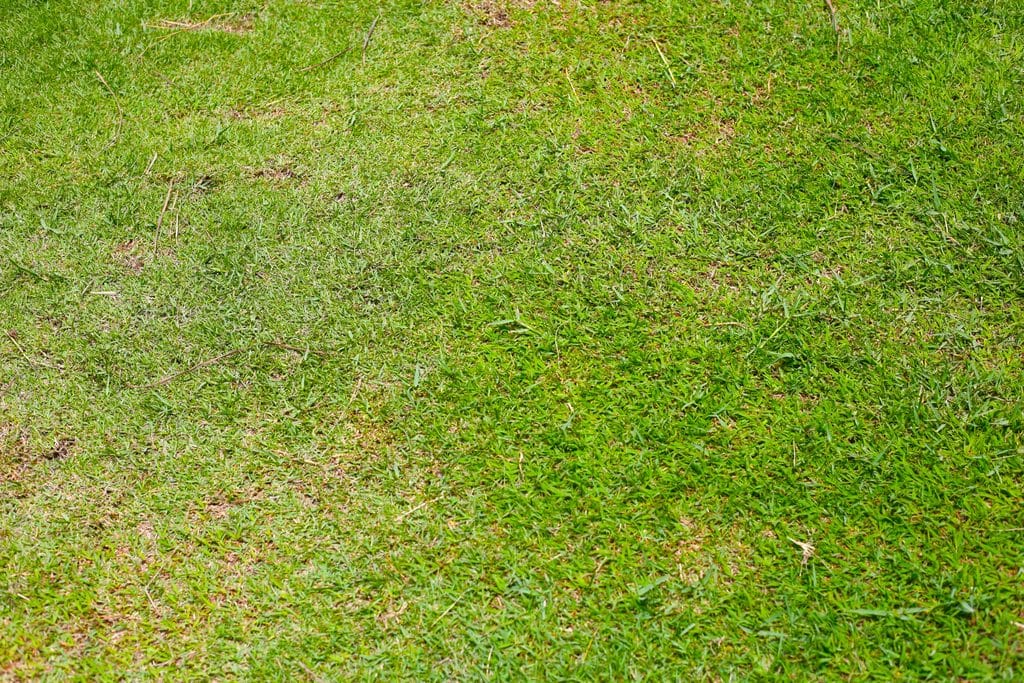
Generally, standard St. Augustine cultivars are maintained higher than dwarf cultivars.
The main goal is avoiding unnecessary stress.
Higher turf can:
- Shade the soil
- Support deeper roots
- Reduce moisture loss
- Improve competition against weeds
If one part of the lawn is already weak, mowing too low can make the unevenness even more noticeable.
Rotate Mowing Direction
Try changing mowing direction regularly.
For example:
- North to south one week
- East to west the next
- Diagonal on another mowing
This can reduce repeated wheel pressure in the same lines and encourage the grass to stand more upright.
It can also reveal areas where the mower is scalping because of uneven ground.
For more local tips on maintaining turf consistently, check out our guide to Cape Coral lawn service secrets and everyday maintenance habits.
What If the Ground Itself Is Uneven?
So far, we’ve focused on uneven grass growth.
But sometimes the issue is the lawn surface itself being physically bumpy or uneven.
These are related but different problems.
Low or raised areas can result from:
- Soil settling
- Erosion
- Tree roots
- Construction
- Animal activity
- Poor grading
- Repeated traffic
A physically uneven lawn may lead to uneven growth because water collects in low spots while raised sections dry faster.
Minor depressions may sometimes be corrected gradually with light topdressing.
Major grading problems are different.
If water consistently moves toward the house, pools for long periods, or creates erosion, that is not just a cosmetic lawn issue. Professional drainage or grading evaluation may be appropriate.
Do not bury existing turf under several inches of soil in an attempt to flatten the yard quickly.
Large corrections need to account for drainage, root zones, irrigation, and existing grade.
Improving Compacted or Poor Soil
If compaction is contributing to uneven growth, aeration may help.
Core aeration removes plugs from the soil, allowing more room for air, moisture, and root expansion.
This may be useful in areas affected by:
- Heavy traffic
- Repeated mowing equipment
- Dense soil
- Poor infiltration
Soil improvement is gradual.
Aeration will not transform the lawn overnight, but it can improve the conditions roots depend on.
If the soil itself is low in nutrients or has an unsuitable pH, testing may also be useful before adding fertilizer randomly.
More fertilizer does not automatically mean more even growth.
Sometimes one area already has enough nutrients while another problem is limiting the roots.
Do You Need to Replace Thin Grass?
Not necessarily.
If the existing grass is alive but stressed, fixing the cause may allow it to spread and recover.
St. Augustinegrass, for example, grows through above-ground runners called stolons and can gradually fill small open areas when conditions improve.
However, severely damaged or completely bare sections may need repair.
Depending on your grass, that may involve:
- Sod
- Plugs
- Sprigs
- Seed for grass species that can be seeded
The important thing is to correct the original cause before replacing the grass.
Otherwise, the new turf may fail for exactly the same reason.
When Uneven Grass Is a Sign of a Bigger Lawn Problem
Some uneven growth is minor.
Other patterns point toward a deeper issue.
Pay closer attention if you notice:
- Bare patches that never fill in
- Yellow or brown sections that keep expanding
- Grass that repeatedly dies in the same spot
- Standing water after normal rainfall
- Soil that remains extremely hard
- Grass pulling up easily
- Large populations of weeds
- Areas that stay thin despite proper irrigation
- Sudden decline in previously healthy turf
These symptoms may suggest problems involving:
- Drainage
- Compaction
- Root health
- Pests
- Disease
- Soil conditions
- Grass selection
This is why uneven grass growth should be treated as a clue.
Trying to make the grass look even without addressing the cause usually leads to temporary results.
You may get a brief flush of green after fertilizer.
You may fill a bare area with sod.
But if the drainage, shade, irrigation, or pest problem is still there, the uneven growth can return.
When to Bring in Professional Lawn Care
There is nothing wrong with troubleshooting your own lawn.
A lot of uneven-growth problems can be corrected with simple adjustments.
But there are times when professional help can save you a lot of guessing.
Consider having the lawn evaluated if:
- You cannot identify the cause
- Several issues appear at once
- Drainage problems are significant
- Large areas are thinning
- Repairs repeatedly fail
- Pest or disease symptoms are present
- You have already adjusted watering and mowing without improvement
A professional can look at the whole property rather than only the visible patch.
That matters because the struggling grass may be several steps removed from the real problem.
For example:
The visible symptom is thin grass. But the actual problem is compacted soil.
Or the visible symptom is brown turf. But the sprinkler head serving that zone is clogged.
Or the grass keeps thinning under a tree because the site simply does not provide enough light for that turf cultivar.
Good professional lawn maintenance is not about throwing treatments at every weak area.
It is about identifying the pattern and building a maintenance approach around the property’s actual conditions.
A Simple Uneven Lawn Checklist
If your Cape Coral lawn is growing inconsistently, work through this list before making major changes.
Look at the Area
☐ Is it sunny or shaded?
☐ Is the grass thinner near a tree or structure?
☐ Is there heavy foot or pet traffic?
Check Water
☐ Is the sprinkler reaching the entire area?
☐ Does water pool there?
☐ Does the soil dry unusually fast?
☐ Is another part of the zone receiving much more water?
Check Soil
☐ Does the soil feel compacted?
☐ Can you easily push a screwdriver into it?
☐ Is the ground physically lower or higher than surrounding areas?
Check the Grass
☐ Is it the same grass species as the rest of the lawn?
☐ Is the mower cutting the proper height?
☐ Are there weeds, pests, or disease symptoms?
☐ Is the grass alive but thin, or completely dead?
Review Your Routine
☐ Are you mowing too short?
☐ Do you always mow in the same direction?
☐ Are you watering automatically without checking rainfall?
☐ Did the problem begin after a fertilizer, herbicide, or other lawn treatment?
Working through these questions can narrow down the cause surprisingly quickly.
Ready to Get Your Lawn Growing More Evenly?
An uneven lawn does not always need an expensive overhaul.
Sometimes the answer is improving sprinkler coverage. Sometimes it is raising the mower height, relieving soil compaction, addressing drainage, reducing traffic, or giving a thin section more time to recover.
The important part is identifying why one area is behaving differently from another.
Once you understand the cause, learning how to fix uneven grass becomes much more straightforward.
Noticing uneven grass growth in your Cape Coral lawn? Our team here at Cape Coral Lawn Care can help identify what may be affecting your grass and create a maintenance approach designed around your property.
Contact us today to learn more about your lawn care options and let’s work toward getting your Cape Coral lawn growing healthier and more evenly.
FAQs
Q: Why is my grass growing unevenly?
A: Uneven grass growth can be caused by differences in sunlight, irrigation coverage, soil conditions, compaction, mowing, drainage, foot traffic, pests, disease, or overall turf health. Compare the struggling area with healthier sections of the yard to look for differences.
Q: How do you fix an uneven lawn?
A: Start by identifying the cause. Then adjust watering, mowing, soil conditions, drainage, traffic, or other lawn-care practices based on what the grass actually needs. Avoid using the same treatment for every patch without first determining why the growth is uneven.
Q: Can overwatering cause uneven grass growth?
A: Yes. Too much water can weaken roots and create soggy conditions, while inconsistent sprinkler coverage may leave another part of the same lawn too dry. Checking irrigation distribution can help identify wet and dry zones.
Q: When should I call a professional about uneven grass?
A: Consider professional lawn care if the same areas continue to struggle despite consistent maintenance, if large sections are thinning, or if you suspect significant drainage, compaction, pest, disease, or soil problems.