
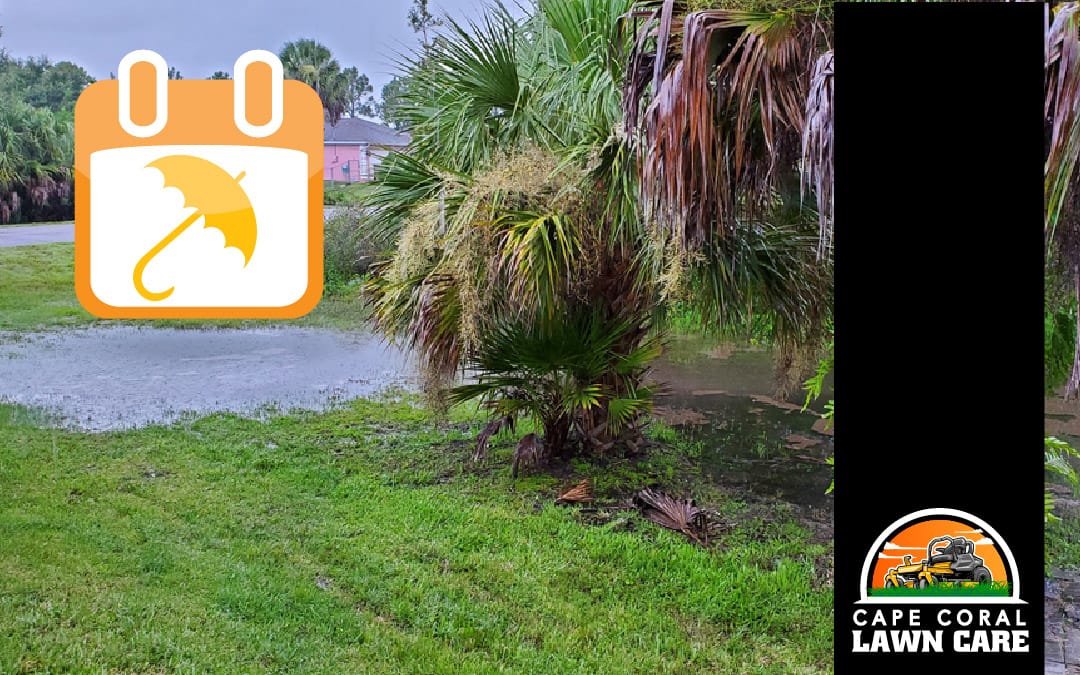
A few rainy days can save you from running the sprinklers. But after a week of heavy rain, you may step outside to find puddles, flattened grass, and a lawn that squishes under your shoes.
If your lawn starts turning yellow, you may wonder whether you need to do something right away.
Here in Cape Coral, long stretches of wet weather can leave parts of your lawn soaked even after the sun comes back out.
The front lawn might dry fairly quickly while a shaded corner stays muddy. That does not automatically mean the grass is ruined, but it does mean your usual mowing and watering routine may need a pause.
The best first step is to give the lawn a chance to dry, then see what still needs attention.
We’ll explain how heavy rain affects your grass, how to distinguish temporary puddles from recurring drainage problems, and what to do once the weather clears. You’ll also learn which changes are worth watching and when to get help with a lawn that is not improving.
How Heavy Rain Affects Your Lawn
Rain gives your grass the moisture it needs to grow. The trouble starts when one soaking follows another before the soil has a chance to drain. Instead of staying moist but well-drained, the soil can remain saturated longer than the grass can tolerate.
Grass roots need air as well as water. When water fills the small spaces in the soil, less air is available around those roots. UF/IFAS explains that very wet soil can interfere with root function and contribute to lawn disease. That helps explain why grass can look stressed even though it has received more than enough water.
You may also notice signs of runoff across your yard. Flowing water can shift loose soil, wash mulch out of nearby garden beds, or leave grass clippings and leaves gathered along low areas.
A muddy trail across the lawn can show you where runoff traveled, even after the water itself has disappeared.
Heavy rainfall can also affect soil nutrients. Some dissolved nutrients may move below the root zone, especially when water passes through sandy soil.
UF/IFAS discusses this in its irrigation publication. But that does not mean you should immediately add fertilizer after a rainy week. First, let conditions improve and find out why the grass looks different.
Your lawn’s response depends on more than the total rainfall. Its condition before the storm, how long it stays wet, and whether water remains on the grass blades all play a role.
A healthy lawn that drains reasonably well may handle the same weather better than a struggling area that stays submerged.
It also helps to separate ordinary rain from floodwater coming onto the property.
If a canal overflow or storm surge has brought saltwater or contaminated water into the yard, recovery may require a different approach.
In that situation, get advice specific to the flooding rather than treating it as a normal rainy-week lawn problem.
Signs Your Lawn Has Had Too Much Water
After several wet days, your lawn may look messy even if the damage is only temporary.
Grass can lie flat, small puddles may linger, and muddy areas may look worse than they did before the rain.
What happens as the yard dries tells you more than its appearance on the first clear morning.
Look for these changes:
- Flattened or matted grass: Blades lie down instead of standing upright, sometimes beneath wet leaves or clippings.
- Soft, muddy ground: Your shoes sink slightly or leave deep impressions where the soil is still soaked.
- Yellowing or thinning patches: Areas of grass lose color or begin looking less full than nearby sections.
- Water that is slow to disappear: Puddles remain while other parts of the lawn are already drying.
- Soil or debris left behind: Runoff leaves small deposits, exposed soil, or lines of leaves and mulch.
Watch those areas over the next few dry days before deciding whether they need treatment. Are the puddles shrinking? Is the ground becoming firmer? Is the grass standing back up?
Improvement is encouraging, even if the lawn has not returned to its usual appearance yet.
Yellow or brown grass deserves a closer look, but color alone cannot tell you what’s causing the problem. Insects, disease, mowing damage, and other issues can produce similar symptoms.
Davey Tree’s overview offers additional background on rain-related lawn problems. For your own yard, pay attention to both the grass and the moisture underneath it before choosing a fix.
What Standing Water Can Mean for Your Lawn
A puddle after a major storm is not the same as a wet spot that returns after almost every rain. Even a yard that usually drains well can temporarily struggle during an unusually wet week.
The more important question is whether the same areas stay waterlogged after the rest of the property begins to dry..
For example, the open lawn may look normal again while the strip beside a walkway still holds water. If that spot stays soaked after future storms, it is worth investigating.
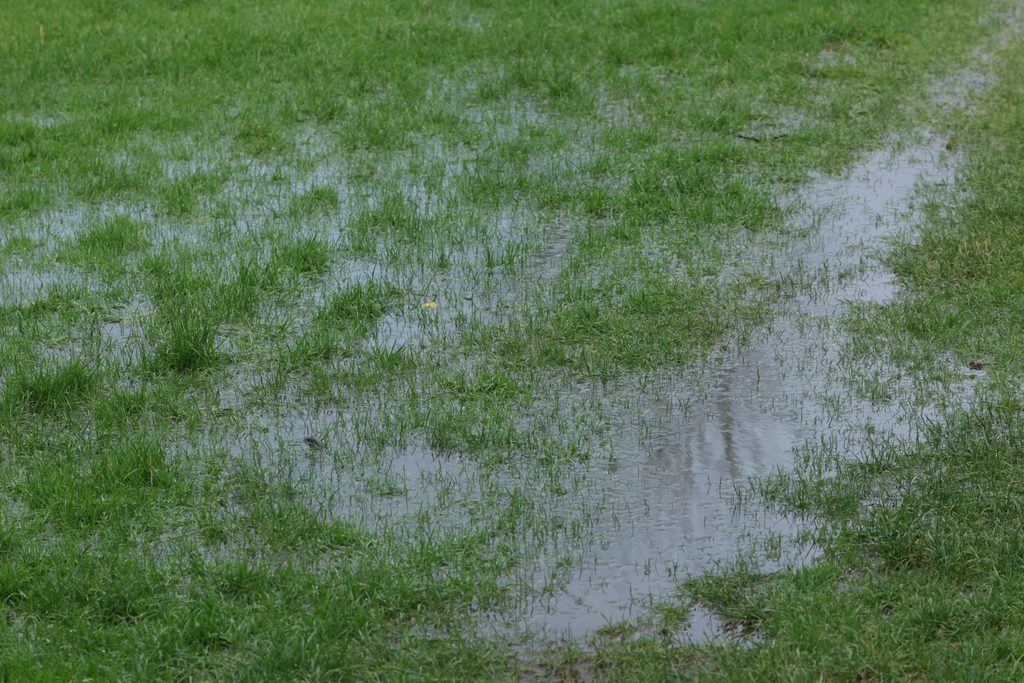
Taking note of a recurring pattern gives you a better starting point than assuming the whole yard has lawn drainage problems.
Several things can make an area drain poorly. A low spot can collect water from surrounding ground.
Packed soil may let water soak in more slowly. The slope of your yard, also called its grading, can direct runoff toward a corner instead of away from it. Water can also collect where there is no clear path for it to move.
UF/IFAS identifies low areas, grading, and compacted soil among possible drainage causes. That is useful because each cause may call for a different response.
A change that helps packed soil will not necessarily solve a problem caused by the shape of the yard.
Cape Coral homeowners should not assume sandy soil rules out standing water in a lawn. Construction fill, packed areas, low spots, and the conditions below the surface can all affect how a particular property drains. Two yards on the same street may respond differently to the same rain.
TruGreen describes common drainage signs, including persistent puddles and muddy areas.
Use those clues to decide what to investigate, rather than treating one puddle as a reason to start digging or install a drain. Understanding where the water comes from is part of choosing a sensible solution.
What to Check Once the Rain Stops
Once it is safe to inspect your property, start from a driveway, patio, or another firm surface. You can often identify the wettest areas without walking through them. If the lawn is still very soft, save a closer inspection for later so you do not leave a trail of deep footprints.
Look for where water remains and what is nearby. Is it collecting beside a downspout? Along a walkway? Behind a landscape bed? Near the house?
Compare those places with areas that have already drained, and notice whether water seems to be arriving from another part of the yard.
Taking a few photos is an easy way to keep track. Photograph the puddle from the same spot after the rain ends and again as it dries.
Add a short note about when the rain stopped and whether the sprinklers have run. If another storm brings the same problem back, those pictures can make the pattern much easier to explain.
Pay particular attention to water collecting against a structure. That calls for a prompt look at the source and drainage path, rather than simply waiting to see whether the grass recovers.
Avoid digging trenches or redirecting runoff toward a neighbor, the street, or a canal without appropriate advice.
The aim is to answer a few practical questions: where is the water staying, where did it come from, and does the problem keep returning?
Those observations help distinguish one isolated soggy spot from a wider drainage concern.
What to Do After a Week of Heavy Rain
Once the rain clears, it can be tempting to tackle everything at once. The grass needs cutting, branches need picking up, and the yard looks untidy. But working on soaked ground can create problems that were not there before. Give yourself permission to delay routine work until the lawn can handle it.
Start with these steps:
- Skip unnecessary irrigation. Check the controller and pause watering while rainfall is meeting the lawn’s needs.
- Keep traffic light. Use firm paths where possible and keep heavy equipment off soft ground.
- Check for debris. Remove small branches or piles of leaves when you can reach them safely without churning up the lawn.
- Wait to mow. Check the soil as well as the grass blades before bringing out the mower.
- Reassess problem areas. Once the yard begins drying, see which spots improve and which still need attention.
Turning off unnecessary sprinkler cycles is one of the easiest adjustments. Your timer may continue its regular schedule even when the lawn is soaked.
UF/IFAS watering recommendations call for responding to the lawn’s needs and suspending irrigation when rainfall provides enough moisture.
That does not mean the sprinklers should stay off indefinitely. Once the weather dries out, check the soil and grass again. Your next watering decision should reflect current conditions, not an automatic return to the schedule you used before the rain.
Follow the current irrigation restrictions that apply to your property when watering resumes.
Rain and humidity can also leave different parts of the lawn drying at different rates. Our article on how Florida’s humidity affects lawn health explains why damp, shaded areas may need more attention. If the sunny front lawn is ready for maintenance, that does not necessarily mean the shaded side yard is ready too.
Give Your Lawn Time Before Returning to Your Normal Routine
For mowing after rain, check two things: whether the blades are dry enough to cut cleanly and whether the soil is firm enough to support the mower. A sunny afternoon may dry the grass blades while the soil underneath remains soft. If your shoes sink or leave deep impressions, wait before mowing.
Heavy equipment and repeated traffic on wet ground can worsen soil compaction. UF/IFAS describes how compaction reduces the spaces that allow water and air to move through soil.
In practical terms, pushing ahead with mowing can leave ruts and make an already wet area harder to manage.
There is no exact number of hours that guarantees a lawn is ready. A yard may dry quickly after one storm and take much longer after several days of rain.
Check the ground where the mower will travel, especially around turns and in low areas, rather than using the calendar alone.
When you do resume mowing, avoid cutting the lawn unusually short to make up for missed time. UF/IFAS mowing advice recommends removing no more than about one-third of the leaf blade in a cut.
If the grass has grown tall, bring it back toward its appropriate height gradually instead of taking off a large amount at once.
If you use a lawn maintenance company, let the crew know about areas that are still soft. A quick heads-up can help prevent equipment from crossing a wet section that is not obvious from the driveway. The goal is to return to useful maintenance without adding avoidable damage.
Helping Your Lawn Recover After Heavy Rain
Once the soil is firmer, take another look at the lawn. This is the time to separate temporary storm mess from areas that are still struggling. You may find that much of the grass looks better on its own, while a few spots need closer attention.
Check the areas that were underwater or stayed muddy longest. Notice whether the grass is producing healthy growth, whether bare soil is becoming more visible, and whether discolored patches are getting larger.
Photos taken earlier can help you judge the direction of change without relying on memory.
If the lawn is improving, keep routine care gentle and appropriate for your grass type. Avoid adding water to soil that is still wet or applying fertilizer simply because a patch looks pale.
Any treatment should address an identified problem, not simply the urge to do something after a rough week of weather.
If one area keeps declining after the surrounding lawn improves, ask for help identifying the problem. Prolonged wet conditions can contribute to disease, but a struggling patch may have more than one issue.
Fixing the watering routine or waiting for sunshine will not necessarily resolve damage that has already developed.
UF/IFAS offers lawn-renovation advice for areas that truly need repair. Before replacing grass, though, address the condition that caused the damage. New sod placed in a spot that repeatedly holds water may face the same problem as the grass it replaces.
You may also notice more weeds as the lawn dries. Some may have been growing already but become easier to see after the grass thins or mowing is delayed. Others, such as dollarweed, are often associated with wet areas.
Increased weed activity is worth watching, but it does not mean every weed appeared because of that particular rainstorm.
Our guide to common Florida lawn weeds and how to prevent them can help you recognize what you are seeing.
Identify the weed and consider the growing conditions before choosing a treatment. If the same damp area keeps producing weeds, moisture may be part of the larger problem.
Recurring waterlogged grass needs a look at drainage as well as lawn care. Depending on the cause, a professional may consider soil compaction, the slope of the ground, or another way to manage runoff.
Avoid assuming that aeration, extra soil, or a drain will fix every soggy lawn. The right approach depends on why that particular area stays wet.
Use the next rain as a chance to see whether the pattern returns. You do not need to watch the yard through an entire storm; simply check afterward and compare it with your earlier photos. Repeated pooling in the same place is useful information when deciding what kind of help the property needs.
Get Help Caring for Your Cape Coral Lawn After Heavy Rain
A week of heavy rain does not automatically mean your Florida lawn has suffered lasting damage. Let the ground firm up, hold off on unnecessary watering, and watch how the affected areas respond.
Those small changes can help you avoid turning temporary sogginess into extra mowing, traffic, or watering damage.
If your lawn is still struggling or standing water keeps returning, Cape Coral Lawn Care can help you identify possible issues and determine a practical next step.
Contact our team today to discuss your Cape Coral yard and get help with lawn maintenance after heavy rain.
FAQs
Q: Can heavy rain damage your lawn?
A: Yes. Prolonged wet conditions can stress roots, disturb soil, and leave areas underwater. However, a wet or flattened lawn is not automatically permanently damaged. Watch how it responds as the ground dries.
Q: How can I tell if my lawn has a drainage problem?
A: Look for the same areas repeatedly holding water after rain, especially when surrounding ground has dried. Recurring muddy spots or water collecting near structures are reasons to investigate the source and drainage path.
Q: Should I mow my lawn after heavy rain?
A: Wait until the grass is dry enough to cut and the soil is firm enough to support the mower without rutting. Dry-looking blades do not necessarily mean the ground underneath is ready.
Q: Should I water my lawn after heavy rain?
A: Usually not while the soil still has enough moisture. Skip unnecessary irrigation, then reassess as conditions dry out. Resume watering when the lawn needs it and within the applicable local restrictions.