
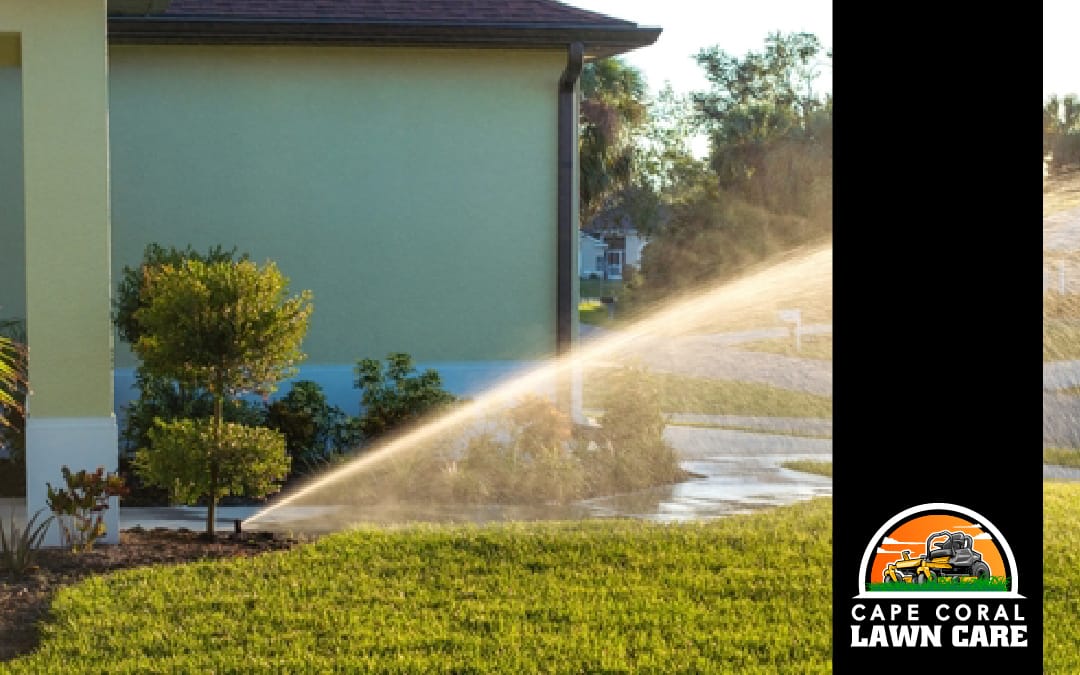
The sprinklers ran this morning, it rained last night, and your lawn still has a few yellow patches. Should you water again– or could all that water be part of the problem?
Fall watering can be tricky here in Cape Coral. An afternoon can still feel like summer, so keeping the sprinklers on their usual schedule can seem reasonable.
But when rain arrives between watering days, your grass may already have enough moisture. Adding more can leave parts of the yard wetter than they need to be.
Yes, you can overwater a Florida lawn in the fall, even when it is hot outside. The good news is that you do not need a complicated watering plan to avoid it. Checking your soil, recent rainfall, and sprinkler settings can help you make better watering decisions.
We’ll walk through how much water an established lawn generally needs, warning signs to watch for, and practical ways to adjust your fall routine. You’ll also learn why yellow grass does not always mean thirsty grass– and what to check before reaching for the hose.
How Much Water Does a Florida Lawn Really Need?
Your lawn needs enough water to reach its roots, followed by time to use that moisture before the next watering. Keeping the ground wet all the time is not the goal. Neither is giving the grass a quick sprinkle every day just because the afternoon feels hot.
For established lawns, UF/IFAS recommendations generally call for about one-half to three-quarters of an inch of water when watering is needed. That amount applies to a watering session. It does not mean you should automatically add that much every day or every week, regardless of rain.
How often your lawn needs water depends on what is happening in your yard. A sunny area beside the driveway may dry faster than a shaded part of the yard. Recent rain may keep the soil moist enough to skip irrigation, while a dry stretch may leave the grass needing water again.
Think of your sprinklers as helping when rainfall falls short. If a storm has already watered the lawn well, you may not need another sprinkler cycle. If that rain was only a brief shower, check below the surface before assuming it was enough. The grass can look wet while the soil underneath is still fairly dry.
Cape Coral’s sandy soil adds another consideration. It may drain water quickly, but that does not make daily watering the right answer. Some yards also have compacted areas or low spots that stay wet longer than the rest. Your own soil conditions matter more than a watering routine borrowed from someone down the street.
Too much water can affect the lawn in ways you might not expect. Frequent light watering can encourage shallow roots, and excess water can carry nutrients beyond the roots’ reach. UF/IFAS offers a useful explanation of those problems. In everyday terms, a lawn can receive plenty of water and still struggle to grow well.
If you want more background, Massey Services’ overview covers common overwatering causes and ways to address them. For your yard, start with one practical question: is the soil already moist enough, or does the grass actually need more water?
Why Fall Can Make Overwatering Easier
Fall lawn care in Cape Coral does not always look like fall lawn care farther north. We can still have warm afternoons, humid mornings, and rainy stretches after summer ends. It is easy to keep the summer sprinkler settings simply because the weather still feels familiar.
At the same time, fall can bring a shift toward drier weather. The National Weather Service describes Southwest Florida’s rainy-season weather as typically extending into mid-October, with plenty of variation around that transition. Some weeks bring repeated showers; others leave you watching for rain that never arrives.
That is why a single fall watering schedule can be frustrating. Turning the sprinklers off for an entire season may leave the lawn short of water during a dry spell.
Leaving them unchanged through a wet week can add water the yard does not need. A quick check before the next scheduled cycle is more useful than making one adjustment and forgetting about it.
For example, you might get a soaking rain on Sunday evening, followed by your usual sprinkler cycle early Monday. If you then hand-water a yellow patch Monday afternoon, that area has received water three separate times. Each one may seem reasonable until you consider them together.
Signs Your Florida Lawn May Be Getting Too Much Water
Before adding more water to an unhealthy-looking lawn, walk through the yard and check the soil. Compare a problem area with a section where the grass looks healthy. That simple comparison can help you spot a pattern you would miss from the driveway.
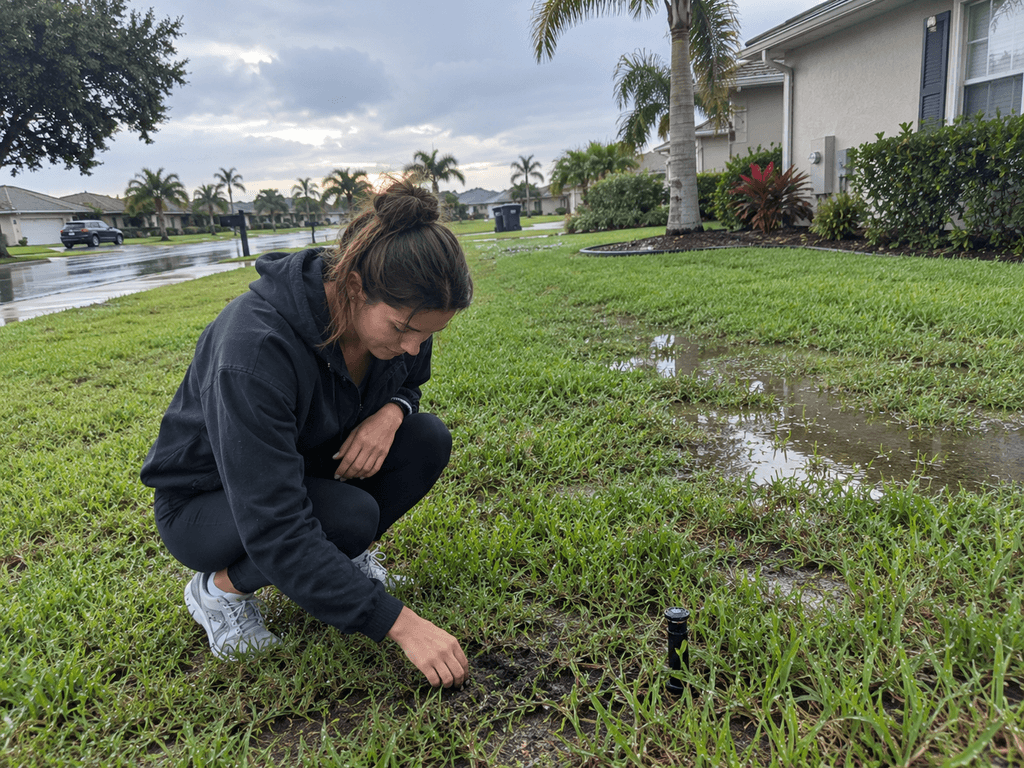
Look for these signs of overwatering grass:
- Ground that stays soggy: The soil feels unusually wet between rainstorms or sprinkler cycles, or water squeezes up around your shoes.
- Puddles that keep returning: The same areas collect water after irrigation and remain wet while nearby areas dry.
- Water running off the lawn: Sprinkler water flows onto the sidewalk, driveway, or street instead of soaking into the yard.
- Grass that declines in wet areas: Yellowing or thinning appears where the soil stays damp, despite regular watering.
- Wet patches beside dry ones: Part of the yard stays soaked while another section seems to get very little water.
These are clues to investigate, not proof of one particular problem. Temporary puddling during a heavy downpour is different from a low spot that stays wet long afterward. A leaking sprinkler component can also leave one section soggy even when the rest of your watering routine is reasonable.
Florida Pest Control describes several common overwatering signs, including wet ground and discolored grass. The important part is putting those observations together. A yellow patch in dry soil calls for a different response than a yellow patch in ground that is already soaked.
That distinction matters for St. Augustine grass care. UF/IFAS offers advice on this grass and notes that chinch bug damage can cause yellow or brown patches, often in sunny areas near pavement or buildings. More water will not solve an insect problem, and watering the whole yard more heavily may create trouble elsewhere.
Wet conditions can also favor lawn diseases. One fall concern is large patch, a disease that can affect St. Augustinegrass and other warm-season grasses during cooler, wet conditions. If discolored patches keep expanding, have the cause identified instead of guessing that the lawn needs water, fertilizer, or a particular treatment.
A few photos can make this easier. Take a picture of the problem area, note when it last rained and when the sprinklers ran, and check it again over the next few days. You do not need an elaborate lawn journal. A couple of dated photos and short notes can help you explain what has been happening if you need help.
How Rain and Irrigation Can Add Up
Your lawn receives water whether it comes from a rainstorm, an automatic sprinkler, or the hose in your hand. The controller only tracks the watering it is programmed to do. Unless the system responds to rain or soil moisture, it may run even when the yard has already received enough.
A simple rain gauge can help you see what fell at your house. Put it somewhere open, away from roof runoff and sprinkler spray, and check it after rain.
A nearby weather report can be helpful, but it may not reflect how much rain your particular yard received.
Still, a rain gauge does not replace looking at the soil. A quick shower may barely wet the ground, while a hard downpour may send some water running off. Use the rainfall reading as one clue, then check whether the lawn still needs supplemental watering.
Remember any extra water you add by hand, too. If you regularly hose down the same brown patch after the sprinklers run, that area may receive much more than the rest of the lawn.
Before repeating the habit, check whether the soil is dry and whether the sprinkler coverage is actually the problem.
Our article on why overwatering damages grass in Florida explains the effects of excess moisture in more detail. For your fall routine, the first step is simply to consider all the water the lawn receives– not just what is listed on the sprinkler timer.
How to Adjust Your Lawn Watering Schedule This Fall
A good lawn watering schedule should make life easier while giving you room to skip watering when your grass does not need it.. You can keep an automatic system and still pay attention to changing conditions. The timer is a helpful tool, but it cannot replace checking the yard.
Start by looking through the controller’s settings. Check the watering days, start times, and active programs. An extra start time or an old program may be running without you realizing it.
If someone changed the settings while new sod was being established, make sure the system is no longer following that temporary routine.
Take a photo of the settings before making changes. That gives you a simple record of where you started and helps avoid confusion later. If different family members handle watering, let everyone know what you changed so someone does not accidentally add back a cycle you meant to skip.
Next, check the rain sensor or soil-moisture control if your system has one. UF/IFAS includes sensors, sprinkler condition, and controller settings in its irrigation checklist.
Follow the manufacturer’s instructions to check your equipment. A sensor that has been bypassed or is not working cannot help prevent unnecessary watering.
If your established lawn is already wet from rain, skip supplemental irrigation and check it again as the soil dries. Avoid making up for every skipped cycle with a daily sprinkle. The point is to water when the lawn needs it, within the restrictions that apply to your property.
New sod is a separate situation. Grass that has not yet rooted needs an establishment routine suited to its stage of growth. If you recently installed sod, get appropriate instructions rather than using the same schedule as a fully established lawn.
What to Consider Before You Water
You do not need to inspect every blade of grass. A short walk through a few representative areas can tell you a lot. Before the next sprinkler cycle, check:
- Recent rain: Did your yard get a soaking rain or only a passing shower?
- Moisture below the surface: Is the soil dry, comfortably moist, or still very wet?
- The grass itself: Is it showing signs of needing water, or simply a color change that needs a closer look?
- Different parts of the yard: Is the sunny front lawn drying faster than the shaded side yard?
- Sprinkler coverage: Are some areas getting too much water while others are being missed?
- Your permitted watering window: Do the current Cape Coral rules allow you to irrigate at that time?
Check more than one spot, especially if only part of the lawn looks unhealthy. Where practical, examine a small sample of soil below the surface, being careful around irrigation lines. Dew can leave the grass damp without telling you much about the moisture available to its roots.
Grass that needs water may develop folded blades, take on a blue-gray tint, or hold footprints instead of springing back quickly. Look at those clues alongside the soil. If a wilted-looking area is already wet, adding another round of water is not a good first response.
Your grass type matters as well. St. Augustinegrass and other Florida grasses have their own care needs, so identify what is growing before following someone else’s advice.
For practical Florida grass care, the useful combination is the right information for your grass and a close look at your own yard.
Check What Your Sprinklers Actually Deliver
If you have ever wondered how long to run the sprinklers, measuring their output is a helpful place to start. Two systems can run for the same number of minutes and apply different amounts of water. Even zones within one yard may deliver water at different rates.
You can use a catch-can test, as described by UF/IFAS. Set out several identical, straight-sided containers across a sprinkler zone, run the zone for a measured interval, and measure the water collected. Follow applicable local rules when testing the system.
For example, suppose the containers collect an average of one-quarter inch in fifteen minutes. At the same rate, thirty minutes would apply about one-half inch. That is an example of how the measurement works, not a thirty-minute recommendation for every Cape Coral lawn.
Look at differences between containers, too. If one is nearly empty and another has much more water, the system may need a coverage adjustment. Running the whole zone longer could soak the wetter area while you try to help the drier one.
Also consider whether sprinklers serving the lawn are watering nearby beds at the same time. Grass, shrubs, and other plants may need different routines.
Our guide to sprinkler and drip irrigation for Cape Coral landscapes explains how different watering methods fit different parts of the yard.
If one area stays wet after you reduce irrigation, look beyond the timer. Check for a leaking component, a low spot, or roof runoff landing in the same place.
Avoid making major drainage changes until you understand where the water comes from and why it is collecting there.
Give a soggy lawn a chance to dry before mowing or repeatedly walking over it. And if yellow or brown patches keep spreading, get help identifying the cause.
Correcting the watering routine is useful, but it does not automatically fix every problem that may already be affecting the grass.
Before setting your fall watering schedule, check the City of Cape Coral’s current rules and restriction map.
Requirements can vary by location, address, water source, and water-shortage orders. The schedule your neighbor follows may not be the one that applies to you.
An allowed watering day does not mean you have to irrigate. If rain has already provided enough moisture, you can skip it. When watering is needed, use your permitted day and time. Early morning is generally preferred when it falls within that window, but the current local requirements come first.
Let’s Find the Right Fall Watering Routine for Your Cape Coral Lawn
Keeping your lawn healthy this fall starts with a few manageable habits: check recent rain, look at the soil, and make sure your sprinklers are doing what you expect.
You do not have to change the settings every time the weather shifts, but it helps to check before adding water to a yard that may already have enough moisture.
Not sure whether your Florida lawn is getting too much water, too little, or dealing with something else?
Our team here at Cape Coral Lawn Care can help you talk through your lawn-care concerns and find a practical next step. Contact our team today to discuss your yard and get help with your fall lawn-care routine.
FAQs
Q: Can you overwater a Florida lawn in the fall?
A: Yes. Rain and regular irrigation can give your lawn more water than it needs, even in hot weather. Check the soil and recent rainfall before adding another sprinkler cycle.
Q: How do I know if my lawn is getting too much water?
A: Look for soggy ground, recurring puddles, runoff, or struggling grass in areas that stay wet. Yellow or brown patches can have other causes, so check moisture, drainage, and sprinkler coverage together.
Q: Should I change my lawn watering schedule during Florida’s rainy season?
A: Adjust it when conditions call for a change. Skip unnecessary irrigation when rain meets the lawn’s needs, then reassess during dry stretches. Follow the current watering restrictions for your property.
Q: Does St. Augustine grass need a different watering routine?
A: Use a routine suited to St. Augustinegrass and your yard’s conditions. Rainfall, soil moisture, sun exposure, and whether the grass is newly planted all matter more than copying a neighbor’s schedule.