
From family gatherings and birthday parties to cookouts, backyard games, pets, and everyday trips between the house and driveway, lawns are meant to be enjoyed. But with all that activity can come some wear and tear, too.
Walking across your grass every once in a while is not going to ruin it. The trouble starts when the same areas are used repeatedly. A shortcut across the yard can slowly turn into a worn path. The section where the kids always play may start looking thinner than the rest of the lawn. Grass around a patio or gate may struggle even though the rest of the yard looks perfectly healthy.
For a Florida lawn, repeated traffic can create two related problems: damage to the grass you see above ground and compaction in the soil underneath it. Once the soil becomes compressed, roots may have a harder time getting the water, air, and nutrients they need to recover.
Cape Coral’s heat, rainfall, sandy soil, and long growing season can make that recovery process a little more complicated. The good news is that most traffic damage does not require you to stop using your yard. It usually requires understanding where the pressure is happening, giving worn areas a chance to recover, and making a few changes to your lawn maintenance routine.
In this guide, we’ll explain how foot traffic damages turf, what warning signs to look for, and what you can do to help high-traffic parts of your Cape Coral lawn grow stronger again.
How Foot Traffic Damages Your Florida Lawn
Normal use is part of having a lawn. Grass is meant to be walked on, played on, and enjoyed.
Problems develop when the same section of turf receives more pressure than it can recover from.
Think about the routes people naturally take through a yard. If the shortest path from the driveway to the backyard runs diagonally across the grass, family members may walk that exact line several times every day.
Pets may race along the same fence. Kids may repeatedly use one patch as a goal line or play area. Guests at outdoor gatherings may cluster near patios, grills, and seating areas.
Over time, that pressure can affect both the turf and the soil.
At the surface, grass blades may become crushed, torn, or worn away. The lawn starts looking thinner, shorter, or more discolored than the areas around it.
Below the surface, repeated pressure can push soil particles closer together. This process is known as compaction.
Healthy soil contains small spaces that allow air and water to move through the ground. Grass roots grow into those spaces and use them to access moisture, oxygen, and nutrients.
When soil becomes compacted, those spaces shrink.
That can make it harder for:
- Water to soak into the soil
- Oxygen to reach the roots
- Roots to grow deeply
- Fertilizer nutrients to move through the root zone
- Grass to recover after stress
This distinction between surface wear and soil compaction matters because the lawn may need more than simply new grass.
If you replace a worn patch without addressing compacted soil underneath it, the new turf may struggle for the same reason the old grass did.
An overview of traffic damage on lawns and the problems it can create also highlights the connection between repeated use, soil compaction, and declining turf quality.
The goal is not to prevent anyone from ever stepping on the grass. It is to recognize when one section of the lawn is receiving more use than it can reasonably handle.
Signs Your Lawn Is Taking Too Much Traffic
Traffic damage tends to develop gradually, which is why homeowners may not notice it immediately.
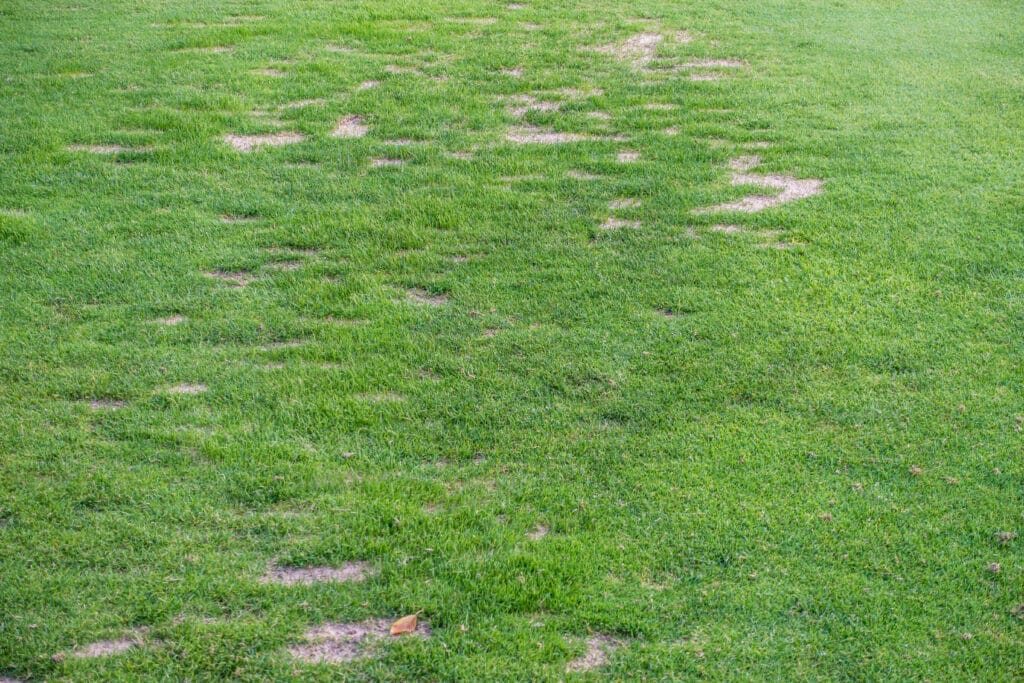
At first, you might see one strip of grass that looks a little flatter than everything around it. Over time, that same area may become thinner, brown, or completely bare.
Common warning signs include:
- Thin grass along frequently used routes
- Bare patches near gates, patios, or play areas
- Brown or worn-looking turf
- Grass that grows more slowly than surrounding areas
- A visible path where people or pets regularly walk
- Hard soil beneath the worn section
- Water pooling or running off instead of soaking in
Some of these symptoms can overlap with other lawn problems, so look at the location and pattern.
If the thin area follows a clear route between the house and the driveway, repeated traffic is a strong possibility. If it circles a playset or sits directly outside a gate, the location may explain a lot.
Compacted areas can also create moisture problems. Water may sit on the surface because it cannot penetrate the soil easily, or it may run toward another part of the yard instead of reaching the roots.
That does not mean every brown or thin patch comes from foot traffic.
Similar symptoms can result from:
- Uneven irrigation
- Shade
- Pests
- Disease
- Poor drainage
- Heat stress
- Nutrient problems
- Soil compaction from equipment
- Mowing issues
If the lawn is growing unevenly in several areas and traffic does not explain all of them, our guide on why your grass may be growing unevenly covers additional causes worth checking.
The important thing is not to assume that every struggling patch needs the same treatment.
Why Cape Coral Weather Can Make Lawn Recovery More Complicated
A high-traffic lawn in Cape Coral is dealing with more than people walking across it.
It is also trying to recover while handling Florida weather.
Heat can increase moisture loss and place already-stressed turf under additional pressure. Heavy rain can leave compacted sections wet because the soil does not absorb water efficiently.
Dry periods can make shallow-rooted grass struggle faster than healthier turf. Sandy soil may drain quickly in some areas while compacted sections of the same yard behave very differently.
That means a damaged section of grass may require different care than the healthy lawn around it.
One of the easiest mistakes to make is assuming a worn patch simply needs more water.
Sometimes it does.
But sometimes the soil underneath is so compacted that water is not moving into the root zone properly. Adding more irrigation can leave water sitting on the surface without solving the underlying root problem.
The same thing can happen with fertilizer.
If roots cannot grow properly, repeatedly feeding the lawn may not produce the improvement you expect. You may see a temporary change in color while the underlying soil problem remains.
Good Florida lawn care starts with looking at the whole area:
- What is the soil like?
- How much sun does the grass receive?
- Is water reaching the area evenly?
- Does rain soak in or pool?
- How much traffic does the section receive?
- Is the grass still alive, or has it completely worn away?
The current season matters as well.
During periods of active summer growth, warm-season grass may recover more quickly if the source of the damage is reduced and the growing conditions are good. But summer heat can also increase stress, especially in turf that already has weak roots.
During cooler or slower-growing periods, recovery may take longer simply because the grass is not spreading as aggressively.
That is where seasonal lawn care becomes part of the recovery process. It is better to work with the lawn’s natural growth rather than expect the same results every month of the year.
Check Your Irrigation Before Adding More Water
If a worn area looks dry, your first instinct may be to increase lawn watering.
Before you do, run the irrigation system and watch what happens.
Check whether the sprinkler heads are actually reaching the damaged section. Shrubs can grow in front of spray patterns. Heads can become tilted, clogged, or damaged. Water pressure can change. A zone that used to cover the lawn evenly may not be doing that anymore.
Also watch what the water does when it reaches the worn section.
Does it soak in?
Does it sit on top?
Does it run toward the sidewalk?
Compacted soil can make a dry-looking area behave very differently from loose, healthy soil.
At the same time, avoid assuming that more water will speed up recovery. Overwatering can encourage shallow roots and create moist conditions that favor fungal problems.
Healthy irrigation is about providing the lawn with the water it needs while allowing the root zone to breathe.
If watering has become one of the harder parts of your routine, our guide on how to create a lawn care routine that works for your Cape Coral yard walks through irrigation, mowing, and regular maintenance habits in more detail.
The important point is this: damaged turf does not automatically equal thirsty turf.
Check the irrigation system, soil condition, and recent Florida weather before changing the watering schedule.
How to Help a Damaged Lawn Recover
Once you have identified foot traffic as a likely cause, the next step is giving the lawn a chance to recover.
The exact solution depends on how severe the damage is.
A slightly thin section may recover once traffic is reduced and the grass receives appropriate care.
A completely bare area with heavily compacted soil will probably need more attention.
The first step is usually reducing the pressure.
You do not have to shut down the backyard, but you may need to redirect how people use it for a while.
For example, if everyone walks from the patio to the gate along the same narrow strip, consider creating a more durable walkway there. If children always play in one section, rotate activities around the yard instead of using the exact same area every day. If pets run along one fence line, you may need to accept that it is a naturally high-use zone and plan the landscape accordingly.
Research and practical guidance on maintaining a high-traffic lawn also emphasizes that choosing suitable turf, maintaining appropriate mowing practices, and spreading wear across the lawn can help grass tolerate regular activity.
For Cape Coral homeowners, a few practical strategies can make a noticeable difference.
Create Intentional Walkways
If people have already created their own path through the lawn, that may be telling you something about how the property is used.
Instead of constantly repairing the same strip of grass, a walkway made from pavers, stepping stones, shell, or another suitable material may be a more practical long-term option.
This is especially useful for routes such as:
- House to driveway
- Patio to pool area
- Side gate to backyard
- Grill to seating area
- Shed to house
You do not need to turn the entire yard into hardscape. Creating a durable route through the most heavily used area can protect the grass around it.
Rotate Outdoor Activities
If your yard is used for sports, games, or gatherings, try not to put everything in the exact same spot every time.
Move goals or practice nets. Shift tables and chairs. Set up lawn games in another section.
Even small changes spread wear across a larger area and give previously used sections time to recover.
This is particularly helpful during summer when outdoor activity and grass growth may both be high.
Protect Newly Repaired Areas
New sod, plugs, or other repaired turf need time to establish roots.
If everyone immediately starts walking across the new grass, you may undo the repair before the turf has a chance to anchor itself.
Temporarily block off the area or direct traffic around it.
For small spots, something as simple as a few stakes, chairs, or a temporary visual barrier may be enough to remind family members and guests to avoid the area.
The goal is not to protect it forever. You just want the roots to become established before the grass is asked to handle regular use.
Mow at the Appropriate Height
Healthy grass generally tolerates traffic better than grass that is already stressed.
That makes mowing height important.
Cutting grass too short reduces the leaf area available for photosynthesis and may weaken the root system. In a high-traffic area, that added stress can make recovery even more difficult.
Mow at the recommended height for your specific grass type, keep blades sharp, and avoid removing too much of the blade in one cutting.
If the lawn has been stressed by an event or gathering, do not immediately scalp it to make everything look “cleaner.”
Give the grass a chance to recover.
Consider Whether Compaction Needs to Be Addressed
If the soil feels extremely hard or water is having trouble soaking into the damaged section, compaction may need attention.
Core aeration can help relieve compaction by removing small plugs of soil, which creates space for:
- Air
- Water
- Nutrients
- Root expansion
This can be particularly helpful in lawn areas that receive repeated foot traffic year after year.
Aeration is not automatically necessary every time someone has a party. But if the turf is repeatedly thin and the ground beneath it has become hard, soil condition should be part of the conversation.
What to Do After a Party or Outdoor Gathering
Outdoor gatherings are one of the best parts of having a yard, so the answer is not to stop using it.
After a large event, give the lawn a quick inspection rather than immediately adding fertilizer or extra water.
Look for flattened grass, damaged blades, areas where chairs or tables sat, and places that received unusually heavy traffic.
In many cases, grass that is simply flattened will stand back up on its own.
If the soil is dry and the lawn legitimately needs water, irrigate according to normal needs. If it has rained recently and the soil is already moist, adding extra water because the grass looks tired is unlikely to help.
Move furniture and other items off the lawn so sunlight and airflow can reach the turf again.
If certain areas were worn more heavily, try to keep people and pets off those sections for a little while.
This gives the lawn time to recover naturally before you decide whether more involved repair is necessary.
How Florida’s Rainy Season Changes Traffic Damage
The rainy season adds another consideration: wet soil compacts differently than dry soil.
Heavy traffic on saturated ground can cause more physical disruption because the soil is softer and easier to compress.
If you are planning a large backyard gathering after several days of heavy rain, consider which parts of the yard are still soggy.
Directing guests toward patios, walkways, or firmer sections can help protect vulnerable turf.
This is particularly relevant around:
- Gates
- Pool decks
- Outdoor kitchens
- Seating areas
- Play spaces
These are already high-traffic zones. When the soil underneath them is saturated, the potential for compaction and surface damage increases.
You do not have to cancel the cookout because it rained.
Just be thoughtful about where the heaviest activity happens.
When Damaged Grass Needs Repair
Not every worn patch needs new turf.
If grass is still present and the roots are healthy, reducing traffic and correcting maintenance issues may be enough for the area to recover.
You may want to consider repair when:
- The area is completely bare
- Grass has died rather than simply thinned
- Compaction has been corrected but turf is not filling back in
- The patch has become dominated by weeds
- The damage is too large for surrounding grass to fill naturally
The appropriate repair method depends on your grass type.
Some Florida turf is commonly installed using sod or plugs rather than seed. Matching the repair material to the existing lawn helps the area blend in and perform consistently.
Before making repairs, correct whatever caused the damage.
If you lay new sod over compacted soil and allow the same heavy traffic to continue immediately, there is a good chance you will end up repairing the same spot again later.
When Traffic Damage Is Really Something Else
One reason lawn troubleshooting can be frustrating is that many problems look alike.
You may assume your backyard gathering caused a brown patch because it appeared shortly afterward, but timing alone does not prove the cause.
Look for clues.
A worn path that follows the exact route people take through the yard is fairly straightforward.
A circular brown patch nowhere near the gathering area may have another cause.
If the grass continues declining after traffic has been reduced, consider whether you are dealing with:
- Irrigation problems
- Pest activity
- Disease
- Drainage issues
- Nutrient stress
- Shade
- Root damage
- Soil problems
The entire lawn does not need to be treated based on one visible symptom.
This is also when professional evaluation can be useful. An experienced lawn-care team can compare the damaged area with surrounding turf and evaluate the soil, irrigation, growth pattern, and other factors instead of treating the grass based only on appearance.
Build Your Lawn Around How You Actually Use Your Yard
Sometimes the best solution is not trying harder to grow grass in a place that receives constant abuse.
Your landscape should fit the way you live.
If one path is used ten times every day, maybe that route should become a walkway.
If the family always gathers beside the patio, expanding the hardscape slightly may make more sense than repairing the same turf every few months.
If pets regularly run the same route, choosing a more traffic-tolerant surface or redesigning that area may be more practical.
Good lawn maintenance is not about forcing every square foot of a property to look identical.
It is about keeping the landscape healthy, functional, and appropriate for the way your household uses it.
That mindset can save a lot of frustration.
Help Your Florida Lawn Stay Ready for the Fun
Foot traffic is part of enjoying your yard. A birthday party, backyard game, energetic dog, or family cookout should not make you feel like the grass is off limits.
The key is paying attention to where traffic concentrates and recognizing the difference between temporary surface wear and longer-term problems such as soil compaction.
If a section begins thinning, take a look at the soil, irrigation, recent weather, and the way the area is being used before trying to repair it. Sometimes the lawn simply needs a little time without heavy traffic. Other situations may call for aeration, turf repair, irrigation adjustments, or a more permanent walkway.
A healthy Florida lawn can handle normal activity, especially when good seasonal lawn care and maintenance give the turf time and resources to recover.
Is Heavy Foot Traffic Taking a Toll on Your Florida Lawn?
If your lawn is showing worn paths, thin areas, bare patches, or other signs of repeated foot traffic, you do not have to guess at the cause or keep repairing the same spot over and over.
Our team here at Cape Coral Lawn Care can help you look at what may be affecting the area and determine what kind of lawn maintenance or recovery approach makes sense for your property.
Contact us today to learn more about your lawn care options and keep your Florida lawn healthy, usable, and ready for the people and activities you enjoy.
FAQs
Q: Can walking on grass damage your lawn?
A: Occasional walking usually is not a major concern for healthy turf. Repeated or heavy traffic across the same area can wear down grass and compact the soil underneath it. Over time, this may contribute to thinning turf, bare patches, weaker roots, and poor growth.
Q: How can I tell if foot traffic is damaging my lawn?
A: Look for repeated patterns such as worn paths between frequently used areas, thinning grass around patios or gates, bare patches in play areas, or turf that stays flattened and struggles to recover. Compacted areas may also have difficulty absorbing water or may develop pooling after rain.
Q: How do I fix a lawn damaged by foot traffic?
A: Start by reducing traffic and identifying whether the problem is surface wear, soil compaction, or both. Depending on the condition of the lawn, recovery may involve adjusting watering or mowing practices, aerating compacted soil, redirecting foot traffic, and repairing areas where the grass has completely died.
Q: Can Florida weather make traffic damage worse?
A: Yes. Extreme heat can stress already weakened grass, while heavy rain can leave soil saturated and more vulnerable to compaction. The season, soil moisture, and current growth rate can all affect how quickly a damaged area recovers.
Q: Should I replace grass in a high-traffic area?
A: Not always. Thin grass may recover after traffic is reduced and underlying maintenance problems are corrected. If an area is repeatedly damaged because it serves as a natural walkway or activity zone, however, adding a more durable path or changing the landscape may be a better long-term solution than repeatedly replacing turf.