
Seeing yellow grass pop up in your yard can be frustrating, especially when you’re not sure what’s causing it.
You may be watering on schedule, mowing regularly, and doing everything that normally keeps your Cape Coral lawn looking healthy. Then one day, you notice a pale area near the driveway, a yellow patch spreading through the backyard, or an entire section of grass that suddenly looks weaker than the rest.
Here’s the tricky part: a lawn turning yellow is usually a symptom, not the actual problem.
Watering issues, weak roots, pests, nutrient imbalances, environmental stress, and lawn diseases can all cause similar discoloration. In some cases, several of those problems may be affecting the lawn at the same time.
This guide will help you understand what yellow grass may be telling you, how to recognize important patterns, and when routine lawn care may not be enough to correct the issue.
What Yellow Grass Is Trying to Tell You
Grass does not simply turn yellow for no reason. A change in color is often the lawn’s way of signaling that something is interfering with healthy growth.
In some cases, the cause is temporary. A stretch of extreme heat, a sudden change in rainfall, or a short period of slower seasonal growth can make grass look less vibrant for a while.
In other cases, grass discoloration may be connected to a deeper issue, such as:
- Too much or too little water
- Poor irrigation coverage
- Nutrient deficiencies
- Weak or damaged roots
- Compacted soil
- Pest activity
- Lawn disease
- Improper mowing
- Excessive shade
- Fertilizer damage
The way the yellowing appears can often provide helpful clues about what’s going on.
For example, yellow grass may develop:
- In isolated circular patches
- Along sidewalks or driveways
- Near sprinkler heads
- In low areas that stay wet
- Across the entire yard
- In stripes or uneven bands
- In areas exposed to intense sun
- Under trees or heavily shaded sections
For example, widespread yellowing often points to a different issue than isolated patches. That is why paying attention to the pattern is often more helpful than simply looking at the color.
UF/IFAS explains that yellow or brown turf may be related to natural seasonal changes, environmental stress, maintenance problems, insects, or disease. Their guide on why turfgrass turns brown is a helpful reminder that there is rarely one automatic answer.
Before adding more water, fertilizer, or lawn treatments, take a closer look at where the discoloration is developing and what else is happening in that area.
Normal Lawn Stress or Something More?
Fortunately, not every patch of yellow grass means your lawn is facing a serious problem.
Florida grasses may temporarily lose some color after extreme heat, unusually dry weather, heavy rain, mowing stress, or seasonal changes. Warm-season turf can also grow more slowly and appear less green when temperatures and daylight levels change.
Temporary lawn stress may improve once conditions return to normal or the maintenance issue is corrected.
However, persistent or spreading yellowing deserves closer attention.
Warning signs that the issue may be more serious include:
- Yellow patches that continue expanding
- Thinning grass in the affected area
- Bare soil beginning to show through
- Grass that does not improve after watering
- Repeated discoloration in the same location
- Turf that feels loose or pulls up easily
- Yellowing accompanied by spots or lesions on the blades
- Areas that stay wet long after rainfall
- Unusual insect activity
Timing also matters.
If the lawn turns yellow immediately after a fertilizer application, the product may have been applied too heavily or unevenly. If discoloration appears after several days of heavy rain, excess moisture or disease pressure may be involved.
If the problem develops during a hot, dry stretch, irrigation coverage or root stress may be more likely.
The location, severity, and speed of the change can help you decide whether the grass is experiencing short-term stress or an ongoing decline.
Common Reasons Florida Lawns Turn Yellow
Cape Coral lawns grow under conditions that can make diagnosis difficult.
Heat, humidity, sandy soil, intense rain, dry periods, pests, and long growing seasons all affect grass health. Multiple lawn problems can also overlap, which means the first explanation that comes to mind may not be the correct one.
Here are some of the most common causes of yellow grass in Florida yards.
Watering Problems
Many homeowners assume yellow grass means it needs more water, but both too much and too little irrigation can cause discoloration.
Underwatered grass may become pale, dry, curled, or brittle. The lawn may also hold visible footprints because the blades do not spring back quickly.
Overwatered turf may look soft, weak, or yellow. The soil may feel spongy, and mushrooms or fungal growth may begin appearing. Constant moisture can reduce oxygen around the roots and encourage shallow root development.
UF/IFAS recommends watering based on signs of lawn thirst rather than simply running sprinklers every day. Its guide to best management practices for your lawn explains that watering less frequently and more deeply encourages roots to grow farther into the soil.
Uneven irrigation is another common cause. A clogged or misaligned sprinkler head can leave one section dry while another receives too much water.
Nutrient Problems
Grass needs the right nutrients to produce healthy green growth.
A nutrient deficiency in grass may lead to pale color, slow growth, thinning, or widespread yellowing. Nitrogen, iron, potassium, and other nutrients all contribute to turf health, but the lawn’s exact needs depend on the grass type and soil conditions.
Cape Coral’s sandy soil can make nutrient management more challenging because water and nutrients move through it quickly. Heavy rainfall may also carry nutrients away from the root zone.
It’s important not to assume every yellow lawn needs fertilizer, as adding the wrong product can sometimes make the problem worse.
Applying the wrong fertilizer, using too much, or fertilizing at the wrong time can cause burn, excessive growth, runoff, or additional stress. A lawn evaluation or soil test may be more useful than applying another product based only on color.
Root Stress
Healthy grass starts below the surface, where the roots supply everything the blades need to grow.
Roots absorb the water and nutrients that maintain color and support growth. When the root system becomes weak, shallow, damaged, or deprived of oxygen, the lawn may begin yellowing even if the surface is still receiving water and fertilizer.
Root stress can develop because of:
- Compacted soil
- Overwatering
- Poor drainage
- Drought
- Cutting the grass too short
- Pest damage
- Excessive thatch
- Poor soil conditions
A lawn may look reasonably healthy for a while even as the roots decline. By the time yellowing becomes obvious, the underlying problem may already be affecting the grass’s ability to recover.
Why Healthy Roots Matter More Than Many Homeowners Realize
Healthy roots help grass tolerate Cape Coral’s heat, dry periods, heavy rain, foot traffic, and routine mowing.
Deep, active roots can access moisture farther below the surface. They also give the turf a stronger foundation for recovering from temporary stress.
When the root system becomes weak, the lawn is much less able to handle everyday stress.
A lawn with shallow roots may yellow quickly during hot weather because the upper soil dries faster. Compacted soil can limit oxygen and prevent roots from expanding. Constantly wet soil can suffocate roots and make the lawn more vulnerable to disease.
This is why simply treating the visible grass does not always solve the problem.
If the root system remains unhealthy, the same yellow patches may continue returning.
Want to learn more about what happens below the surface? Check out our guide on why healthy root growth plays such an important role in maintaining a strong lawn.
Improving root health may involve adjusting irrigation, correcting soil compaction, mowing at the proper height, or addressing drainage problems. The right solution depends on what is weakening the roots in the first place.
When Yellow Grass May Be Related to Disease
Some turfgrass diseases cause yellowing, thinning, spots, or irregular patches.
Florida’s warmth and humidity can create favorable conditions for disease development, especially when grass stays wet for extended periods. Overwatering, nighttime irrigation, poor airflow, excessive thatch, and dense shade may all increase disease pressure.
Common lawn disease symptoms can include:
- Circular or irregular yellow patches
- Brown outer rings
- Spots or lesions on individual blades
- Thinning turf
- Areas that appear water-soaked
- Recurring damage during humid conditions
- Patches that expand after rainy weather
Because many lawn problems share similar symptoms, it’s easy to mistake one issue for another without taking a closer look.
For example, a yellow patch caused by poor sprinkler coverage may resemble early disease. Chinch bug damage can look like drought stress. Root problems can create thinning that homeowners mistakenly blame on fungus.
UF/IFAS notes in its overview of lawn diseases in Florida that physical damage, environmental disorders, nutrient deficiencies, pests, and pathogens may create similar symptoms or even occur at the same time.
That is why accurate identification matters before applying fungicide or another treatment.
Using the wrong product may fail to correct the real issue and could add unnecessary stress to the lawn.
Signs Your Lawn May Need More Than Routine Maintenance
Some yellow areas respond well to basic changes.
Correcting sprinkler coverage, reducing irrigation, raising the mowing height, or addressing a minor nutrient issue may help the grass begin recovering.
Other problems continue despite normal care.
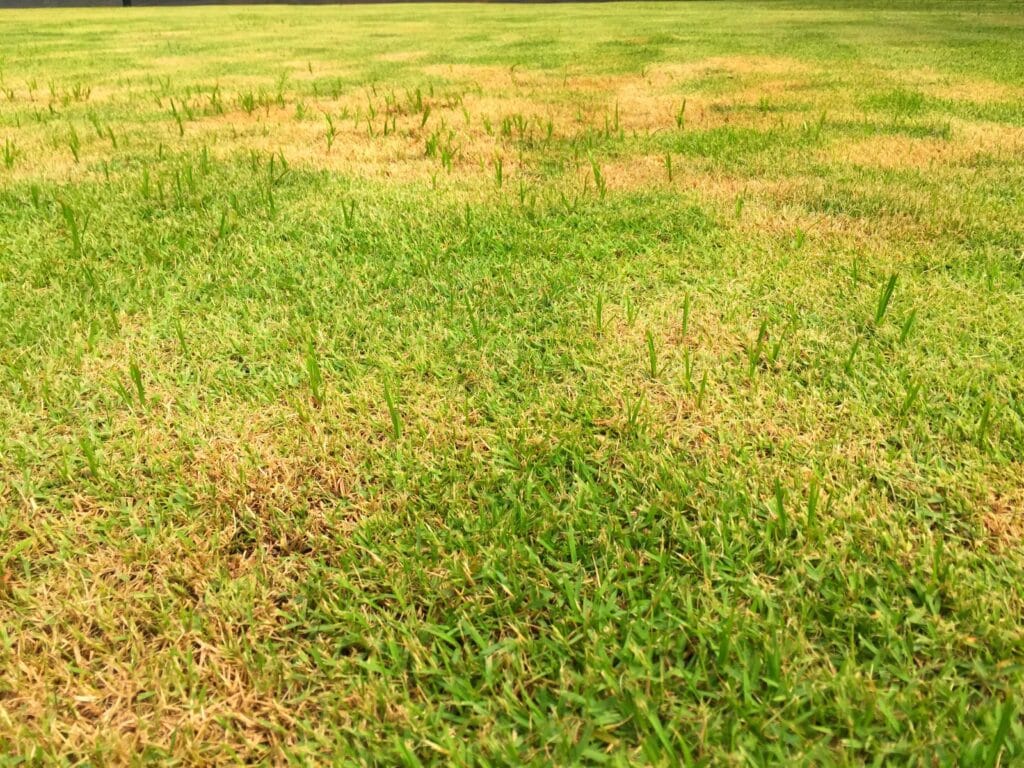
You may need a closer evaluation if:
- Yellow patches keep spreading
- Grass becomes noticeably thinner
- The same areas decline repeatedly
- Dead spots begin appearing
- The turf fails to improve after watering adjustments
- Disease-like symptoms appear on the blades
- The soil stays constantly wet
- Grass pulls up easily from the soil
- Roots appear dark, short, or damaged
The difference between temporary discoloration and ongoing turf decline is often whether the area begins recovering after the cause is corrected.
If the grass continues deteriorating, there may be a root, pest, disease, drainage, or soil issue that routine mowing and watering cannot solve by themselves.
Early evaluation can prevent a manageable yellow patch from turning into a larger lawn repair project.
If discoloration has already progressed into bare or dead areas, our guide to grass patch repair in Cape Coral explains how patch size, soil conditions, and the underlying cause influence the repair method.
A Simple Way to Investigate Yellow Grass
Before applying more fertilizer or another lawn treatment, take a few minutes to inspect your lawn for clues about what’s causing the discoloration..
Check the Soil
Press a screwdriver or small garden tool into the ground.
If the soil is extremely hard, compaction may be restricting water and root growth. If it is constantly soggy, drainage or overwatering may be the problem.
Check Irrigation Coverage
Run the sprinkler system and watch where the water lands.
Look for blocked heads, uneven spray, runoff, and sections receiving too much or too little water.
Inspect the Grass Blades
Look closely for spots, streaks, lesions, chewing, or unusual residue.
These details can help separate disease, pest damage, and general environmental stress.
Look at the Pattern
Is the yellowing uniform, circular, irregular, or limited to the edges?
The pattern may provide useful clues about the underlying cause.
Review Recent Lawn Care
Think about what changed before the yellowing appeared.
Did you recently fertilize? Has rainfall increased? Was the lawn mowed shorter than usual? Did a sprinkler stop working?
This process will not always provide a final diagnosis, but it can help eliminate obvious causes and prevent unnecessary treatment.
Building Better Florida Lawn Care Habits
Good Florida lawn care does not guarantee that discoloration will never appear, but it can make the lawn more resilient and easier to troubleshoot.
Helpful habits include:
- Mowing at the correct height for the grass type
- Keeping mower blades sharp
- Watering deeply only when needed
- Adjusting irrigation after rainfall
- Fertilizing responsibly
- Monitoring shaded and poorly draining areas
- Addressing thinning before bare spots develop
- Watching for pest or disease symptoms
- Avoiding unnecessary chemical treatments
Consistency matters more than frequently switching products or trying multiple treatments without identifying the underlying issue.
.
When a lawn receives balanced care, it develops stronger roots and thicker growth, making it more resilient to heat, rainfall changes, pests, and other stresses. Even so, if yellowing does appear, identifying the underlying cause early is the best way to prevent more extensive damage.
Not Sure Why Your Lawn Is Turning Yellow?
If your lawn has started turning yellow, identifying the underlying cause is the first step toward restoring its health.
The problem may be temporary stress, uneven irrigation, weak roots, a nutrient deficiency, pest activity, disease, or a combination of issues. The color change alone does not always reveal the answer.
Pay attention to where the discoloration appears, how quickly it spreads, and whether other symptoms are present. Acting early gives you a much better chance of correcting the issue before larger parts of the yard are affected.
Not sure why your lawn is turning yellow? Contact our expert, friendly team here at Cape Coral Lawn Care today for a professional lawn evaluation and proven solutions designed to help restore your Cape Coral yard.
FAQs
Q: Why is my lawn turning yellow even though I water it?
A: Yellow grass can be caused by several factors besides watering, including root problems, nutrient deficiencies, lawn stress, pests, and disease. Too much water may also cause yellowing by weakening the root system.
Q: Can lawn diseases cause yellow grass?
A: Yes. Certain turfgrass diseases can cause yellowing, thinning, lesions, and patchy areas that may resemble watering, nutrient, or pest problems.
Q: Will yellow grass turn green again?
A: In many cases, grass can recover once the underlying issue is identified and corrected. Recovery depends on the severity of the damage and whether the roots remain healthy.
Q: How can I tell if my lawn has a nutrient deficiency?
A: Nutrient deficiencies often cause widespread discoloration, slow growth, or weak turf. However, watering problems, disease, and root stress may create similar symptoms, so a proper lawn evaluation may be needed to confirm the cause.