
After months of hot afternoons, heavy showers, and grass that seems to need cutting again almost immediately, your yard may look a little worn out.
You might notice a brown strip beside the driveway, a thin patch near the patio, or a corner that stays soggy long after the rain stops.
A Florida lawn can experience several different stresses over one summer. Heat and dry periods can leave grass short of moisture, while repeated rain can keep other areas too wet. Mowing, irrigation, and everyday use also affect how well the lawn handles those conditions.
The good news is that a rough-looking lawn does not automatically need replacement.
Some grass can recover when conditions improve and the cause of the stress is addressed. Other areas may need closer attention before they begin filling in.
We’ll explain what summer weather can do to your grass, which changes deserve a closer look, and how to approach lawn recovery in Cape Coral.
The aim is to help you choose useful next steps without automatically adding more water, fertilizer, or treatments.
How a Hot Florida Summer Affects Your Lawn
Florida’s warm-season grasses are adapted to warm weather, so summer heat alone does not mean your lawn is in trouble. In fact, warmth and adequate moisture often support active growth.
Problems develop when extreme conditions, limited water, poor drainage, or maintenance stress push the grass beyond what it can handle well.
Think about two sections of the same property. The grass beside an open driveway may dry quickly during a rain-free stretch.
A shaded section behind the house may stay damp after repeated storms. Both can look unhealthy, but they may need very different care.
UF/IFAS identifies heat, humidity, and variable rainfall among the challenges of summer lawn care.
Its discussion of common summer lawn mistakes also explains how mowing too short, overwatering, and excessive fertilizer can make those challenges harder on the grass.
Heat and Heavy Rain Create Different Problems
During a hot, dry stretch, the lawn can lose moisture faster than it is replaced. Growth may slow, blades may fold, and the grass may lose its usual color.
Areas with shallow or damaged roots can have a harder time keeping up with the lawn’s water needs.
Florida Sunshine Lawn Care also shares homeowner tips for dealing with extreme summer heat.
For your own yard, keep the focus on the grass type, actual soil moisture, and recent weather rather than assuming every hot day requires extra irrigation.
Repeated rain creates a different problem. When the soil remains soaked, water fills spaces that would otherwise hold air. Grass roots need oxygen, so prolonged saturation can interfere with healthy root function. Long periods of wet weather can also favor certain lawn diseases.
That is why a rainy week does not always leave a healthier lawn.
If automatic irrigation keeps running on top of the rain, some areas may receive more moisture than they need. Meanwhile, a later dry spell can leave the same yard needing a fresh check of its watering routine.
Common Lawn Changes You May Notice
After a demanding summer, the lawn may look different in several ways:
- Brown or yellow areas: Color changes can appear in isolated patches or across larger sections.
- Thinner coverage: You may see more soil between the blades, especially in areas already struggling with shade or wear.
- Uneven growth: Some sections grow quickly while others barely seem to need mowing.
- Flattened or soggy grass: Repeated rain can leave muddy ground, matted blades, or temporary puddles.
Different types of Florida grass respond differently to drought, wet conditions, and seasonal changes.
UF/IFAS’s Lawn Care Made Simple reference compares common grasses and their care needs. Knowing what is growing in your yard helps you interpret changes more realistically.
Your lawn also does not experience identical conditions from one end to the other.
Shade, sandy soil, compacted areas, and the slope of the ground all affect how quickly different spots dry.
Good seasonal lawn care accounts for those differences instead of treating the whole property as one uniform patch.
The First Signs of Lawn Damage to Look For
Start with a walk around the yard when the ground is firm enough to inspect. Choose one affected section and compare it with healthier grass nearby.
Look at the soil, blades, and location of the damage before deciding what the lawn needs.
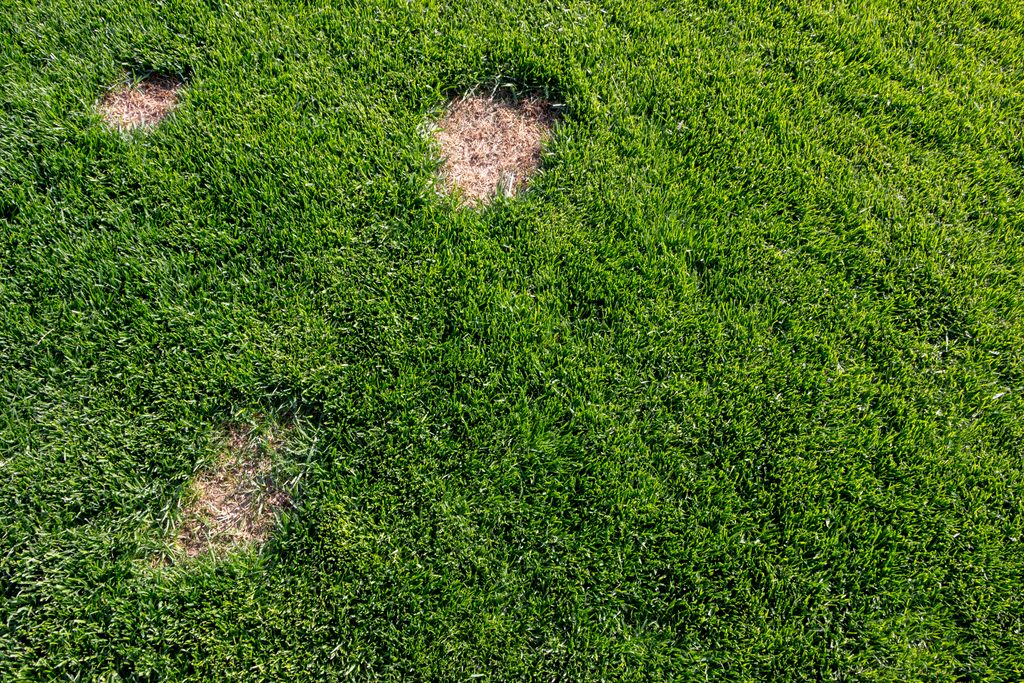
Pay particular attention to these patterns:
- Discoloration that keeps spreading: Photograph the edge of the patch so you can tell whether it is getting larger.
- Bare spots or declining coverage: Check whether the area is also exposed to repeated foot traffic, low mowing, or missed sprinkler coverage.
- Spotted, chewed, or unusually ragged blades: These deserve closer examination for disease, insects, or cutting damage.
- Ground that stays wet: Notice whether the same section remains muddy while nearby soil dries.
- Damage following a maintenance pattern: A strip along a mower route or a patch appearing after a product application may offer a useful clue.
These observations help narrow the possibilities, but they do not confirm a diagnosis. A dry-looking patch may have insect damage.
Yellow grass in wet ground may have stressed roots. The appearance alone cannot tell you which adjustment or treatment is appropriate.
Compare Wet and Dry Areas Before Adding Water
Check below the grass surface where practical, taking care around irrigation lines. Wet blades after dew or a brief shower do not necessarily mean the soil has enough moisture.
Likewise, dry-looking blades above soaked ground do not mean another sprinkler cycle will help.
For example, if the patch near the driveway is dry while a low corner remains muddy, watering both areas more heavily is unlikely to solve both problems.
Check whether coverage, drainage, or another difference explains what you are seeing.
Our guide to what happens to your lawn after a week of heavy rain explains excess-moisture symptoms and recurring drainage concerns. Temporary puddles after a major storm are different from an area that stays waterlogged after surrounding ground has dried.
If wet areas are gradually becoming firmer and the grass looks better as they dry, that is encouraging.
If discoloration spreads or standing water keeps returning, investigate further rather than simply waiting for the next sunny afternoon.
Why Brown Grass Does Not Always Mean Your Lawn Is Dead
Some grasses can lose color and slow their growth during a dry period while remaining alive. This temporary resting response is called dormancy.
When suitable moisture returns, living grass may begin growing and greening again.
UF/IFAS drought guidance explains that certain grasses are better able to resume growth after drought than others.
Zoysiagrass can also turn brown during drought and later green up when moisture returns. However, no grass can be assumed to survive every length or severity of water shortage.
St. Augustinegrass, common in Florida yards, should not automatically be treated as though it will tolerate the same dry conditions as a more drought-tolerant lawn. The grass variety, condition of its roots and growing points, and extent of the damage all affect its chances of recovery.
Separate these two ideas when deciding what to do:
- Stressed but living grass may recover when the underlying problem is corrected and growing conditions allow it.
- Dead grass needs replacement or another repair approach. Waiting or adding fertilizer cannot bring dead plants back to life.
If you cannot tell which situation applies, get help assessing the area before replacing it.
There is no need to buy sod immediately because the grass is brown, but spreading damage should not be dismissed as harmless dormancy either.
How to Help Your Florida Lawn Recover After Summer
Lawn recovery starts with matching care to the problem. A missed sprinkler strip, soggy low spot, and scalped patch will not all respond to the same solution.
Address obvious issues first, then monitor what changes instead of introducing several new products at once.
Adjust Watering to What the Lawn Needs Now
Review recent rain, soil moisture, and sprinkler coverage before changing run times. If the yard already has enough moisture, skip unnecessary irrigation.
If one section is being missed, correct the coverage rather than soaking the rest of the property to compensate.
Check the controller for old programs or extra start times. If you use a rain sensor or soil-moisture control, follow the manufacturer’s instructions to check that it is working.
An automatic system still needs attention when weather and lawn conditions change.
UF/IFAS watering recommendations emphasize irrigating established grass according to need and accounting for rainfall. Frequent light sprinkling is not a substitute for a watering routine suited to the lawn’s roots and soil.
Before scheduling irrigation, check Cape Coral’s current watering rules for your address, water source, and any applicable restrictions.
An allowed watering opportunity does not mean the lawn needs water. Equally, trying to speed recovery is not a reason to ignore the permitted schedule.
Resume Mowing Without Cutting Too Much
Let saturated ground become firm enough to support the mower, and avoid mowing wet blades when possible. Otherwise, equipment can leave ruts and wet clippings may collect in heavy clumps. The first clear afternoon after a rainy stretch is not always the right mowing window.
Use a sharp blade and the recommended height for your grass variety.
Avoid removing more than one-third of the blade in one cut. If missed mowings have left the lawn tall, bring it back toward its usual height gradually rather than cutting it very low in one session.
For drought-stressed grass, UF/IFAS recommends mowing at the upper end of the grass’s appropriate height range. That means choosing a suitable height for the species and variety, not allowing every lawn to grow indefinitely taller.
Also check your routine as growth changes. Grass recovering during a warm stretch may need regular trimming, while slower growth may require less frequent mowing.
Cutting simply because it is Saturday can add unnecessary work when there is little to remove.
Make Fertilizer and Treatment Decisions Carefully
It is tempting to feed a pale lawn and hope it fills in quickly. But fertilizer cannot correct poor drainage, restore dead roots, or stop an insect infestation.
Start by identifying whether nutrition is part of the problem.
UF/IFAS soil testing information explains how testing can help guide nutrient decisions. Ask your Extension office what test is appropriate and how to interpret it for your grass. Soil tests can provide information about pH and certain nutrients, but they do not diagnose every lawn problem.
If fertilizer is needed, get advice on suitable timing, product, and amount for the lawn’s condition.
Avoid adding several products to chase a quick color change, especially when the grass is already stressed.
The same principle applies to pesticides and fungicides.
UF/IFAS disease advice emphasizes confirming the cause because disease can resemble maintenance problems or other damage. Choose a treatment only when it fits the identified problem and follow the label directions.
Give Worn and Damaged Areas a Chance to Recover
Summer activity can leave traffic damage alongside weather stress. A route to the pool or patio may remain thin because people keep crossing it, even after moisture conditions improve. Redirect traffic onto an existing path and move temporary equipment when practical.
Monitor areas with living grass to see whether they begin filling in. Watch for healthier new blades and growth along patch edges. Compare photos taken from the same location so you can judge progress without relying on memory.
If part of the lawn has died, find out why before repairing it. UF/IFAS renovation information recommends identifying the cause of decline before replacing damaged turf. Depending on the grass and extent of loss, suitable plugs or sod may be needed.
New grass placed over an unresolved drainage, shade, or traffic problem may struggle again. Avoid buying a generic seed mix without checking whether it matches your existing Florida grass and the growing conditions. Repair should follow an assessment of the site, not just the size of the bare patch.
Keep Seasonal Maintenance Flexible
The end of summer does not create an instant reset for a Cape Coral yard. Warm weather may continue, rainfall can change, and different parts of the lawn may recover at different rates. Reassess your routine as conditions change rather than making one adjustment for the entire season.
A short record can make this easier. Note when you mow, whether irrigation runs, and what happens to the problem areas. If the lawn improves, you have a useful record of the changes that may be helping. If it declines, those notes provide context for a professional assessment.
Planning matters when you are away, too. Our article on keeping your Florida lawn healthy during vacation season explains how to prepare maintenance and irrigation for changing weather. Avoid increasing watering or cutting unusually short simply to make the yard last until you return.
When It Is Time to Call a Professional
Seek help when damage continues spreading, bare spots keep returning, or the grass declines despite appropriate watering and mowing. Sudden changes in color, blade condition, or coverage also deserve attention, especially if the cause is unclear.
For example, a patch of St. Augustinegrass that appears thirsty despite adequate soil moisture may need inspection for insect activity or another problem. UF/IFAS brown-patch resources describe how insects, diseases, and environmental stress can produce similar symptoms. Repeatedly adding water can delay finding the real cause.
A qualified professional can review the growing conditions, maintenance history, and visible damage to narrow down the possibilities. Some problems may need Extension assistance or diagnostic testing. Bring your photos, irrigation settings, and details of any recent product applications to that conversation.
Our team here at Cape Coral Lawn Care can discuss your lawn-maintenance concerns and help you decide on a practical next step. You do not have to keep experimenting with products when the lawn is not responding.
Get Help With Your Cape Coral Lawn’s Summer Recovery
A Florida lawn can come through summer with a mix of dry patches, excess moisture, worn areas, and changing growth. Brown grass does not tell the whole story. Check what is happening in the soil, consider the grass type, and adjust maintenance to the conditions your yard has today.
Is your lawn still looking rough after a long summer? Our team here at Cape Coral Lawn Care can help you talk through what has changed and find a practical approach to ongoing care. Contact our team today to discuss your Cape Coral lawn and take the next step toward healthier growth.
FAQs
Q: Why does my Florida lawn look brown after summer?
A: Dry conditions, excess moisture, mowing damage, pests, or disease may contribute. Compare affected areas with healthier grass and check the soil before assuming heat or lack of water is the only cause.
Q: Can brown grass recover after a hot Florida summer?
A: Some stressed or dormant grass can recover when conditions improve. Recovery depends on the grass type, surviving roots and growing points, and whether the underlying problem is corrected. Dead grass will need repair or replacement.
Q: Should I water my lawn more after a hot summer?
A: Not automatically. Check recent rainfall, soil moisture, drainage, and sprinkler coverage. Add supplemental irrigation only when needed and within the current rules that apply to your property.
Q: How can I help my Florida lawn recover after summer?
A: Identify the cause of the damage, adjust watering, mow at the proper height, and reduce unnecessary traffic. Base fertilizer or treatments on an identified need, and get help if the lawn continues declining.