
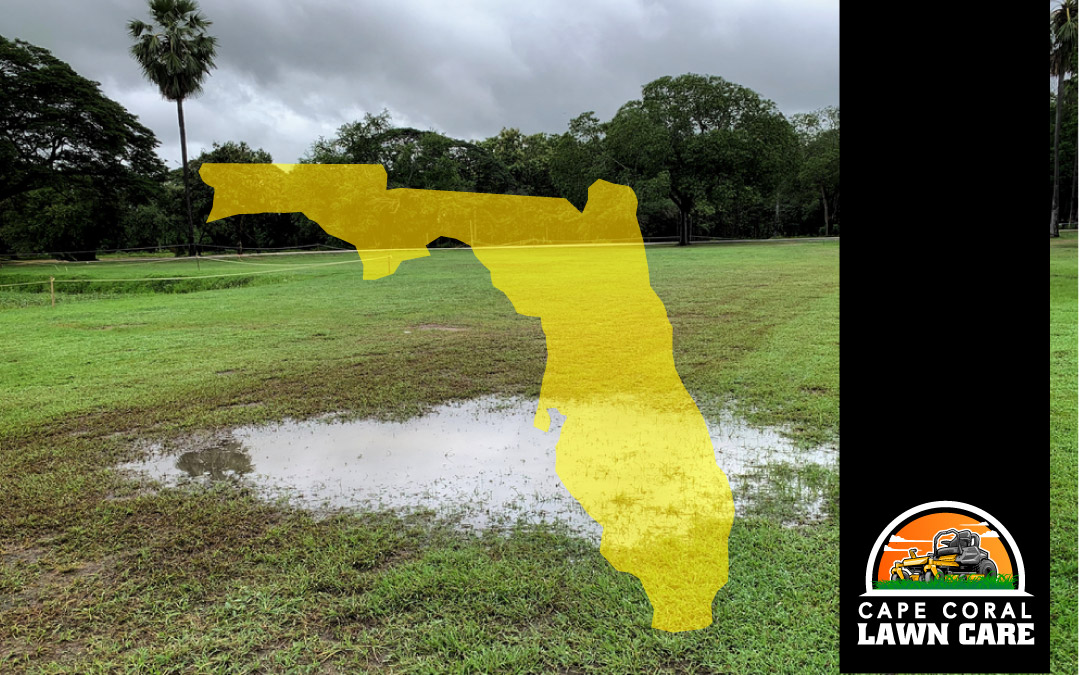
The rain has stopped, but your yard looks nothing like it did before the storm. Branches cover the grass, mulch has washed across the walkway, and a low corner is still underwater. You may be wondering what will recover on its own and what needs attention right away.
A big Florida storm can affect more than the appearance of your lawn.
Flooding can stress roots, moving water can carry soil away, and fallen debris can cover healthy grass. On some Cape Coral properties, coastal flooding can also leave salt behind.
The good news is that a storm-damaged appearance does not automatically mean the lawn is lost. Some grass can recover once water drains, covering debris is removed, and conditions improve.
The next steps depend on what happened in your particular yard. We’ll explain the signs to look for, how to recognize recurring lawn drainage problems, and how to approach cleanup and grass recovery without adding unnecessary damage.
How a Florida Storm Can Damage Your Lawn
Strong winds and heavy rain can leave several kinds of damage in the same yard. One area may simply be flattened, while another has lost soil or stayed submerged for an extended period.
Understanding the difference helps you decide where to start:
- Wind and falling debris: Branches, leaves, and damaged landscape materials can land on the lawn, crush grass, or block sunlight.
- Heavy rain and flooding: Soil can remain soaked, and water may cover the grass long enough to affect its health.
- Moving water: Runoff can wash away soil, expose roots, or deposit mud, sand, and mulch somewhere else.
- Saltwater exposure: Storm surge or flooding from saltwater sources can leave salts in the soil and affect recovery.
When soil stays saturated, water fills spaces that normally contain air. Grass roots need oxygen, so extended saturation can interfere with normal root function.
Flooded grass may begin thinning or changing color even though it has received more than enough water.
Wet conditions can also favor certain diseases. That does not mean every yellow patch after a storm has fungus, but prolonged moisture is one reason to watch the lawn as it dries.
Common Signs of Storm Damage to Look For
Once the yard is safe to inspect, look for changes in both the grass and the ground beneath it. Some will be obvious immediately; others may become clearer over the following days.
Common signs include:
- Flattened or matted grass, especially beneath wet leaves or clippings.
- Yellow, brown, or thinning patches that look different from nearby turf.
- Muddy areas and lingering puddles where the ground remains unusually soft.
- Exposed soil or roots where water has washed material away.
- Grass buried beneath debris, including branches, mulch, sand, or mud.
A few bent blades are different from grass that has been submerged or buried for a long time. Compare affected areas as cleanup progresses rather than judging the entire lawn from the first view outside.
UF/IFAS storm-recovery advice recommends removing covering debris and watching for lawn disease after prolonged rain. Large patch, formerly called brown patch, and root-rotting diseases are among the concerns, depending on the grass and conditions.
Their symptoms can resemble other damage. Spreading discoloration deserves assessment, rather than an automatic fungicide application.
Why Saltwater Flooding Needs a Different Approach
Cape Coral’s coastal setting means some properties may experience saltwater exposure during severe storms.
Salts left in the soil can make it harder for grass to take up water, so the lawn may struggle even after visible flooding disappears.
That is different from ordinary rainwater soaking the yard.
UF/IFAS salinity guidance explains that moving salts below the root zone requires suitable freshwater and adequate drainage. Adding more water to an already waterlogged area is not a complete recovery plan.
If saltwater entered your yard, seek prompt advice about soil testing, drainage, and the quality of any irrigation water used for recovery.
Do not assume the lawn should simply be left to dry completely, or that a large sprinkler application will solve the problem.
Also avoid applying gypsum as a general storm treatment. Whether a soil amendment is useful depends on the soil and test results; it is not automatically needed on Florida’s sandy soils.
When Heavy Rain Turns Into a Lawn Drainage Problem
Temporary puddles after an unusually large storm do not necessarily mean your property has a long-term drainage problem. The ground may need time to release water after receiving more rain than it normally handles at once.
The more useful clue is what happens as surrounding areas dry.
If the open lawn becomes firm while the same corner remains muddy, pay attention. If that corner floods again during later, less intense storms, there may be an underlying reason water keeps collecting there.
Common contributors include:
- Low spots: Water drains from higher ground and collects in a depression.
- Compacted soil: Packed ground slows water movement and restricts root growth.
- Poor grading: The slope of the yard directs runoff into an unsuitable area.
- Limited drainage pathways: Water reaches a spot without an effective way to leave it.
Even a sandy Florida lawn can have drainage problems. Construction fill, compacted layers, and conditions beneath the surface can change how water moves through an individual property.
Repeated flooding can weaken the lawn over time. Water sitting in one place stresses grass, while water moving through another area can erode soil.
Replacing damaged turf without addressing the cause may leave the new grass facing the same problem during the next storm.
During the Florida rainy season, repeated storms can make these patterns easier to notice.
Severe weather can also occur outside the usual rainy months, so base your assessment on the yard’s condition rather than the calendar.
What to Check Once the Rain Stops
Begin from a firm surface, such as a patio or driveway. You may be able to see the wettest sections without walking across them. Avoid entering floodwater or working near fallen power lines, unstable trees, or hanging branches; those hazards need the appropriate professionals first.
When conditions allow a closer look, check:
- Downspouts and roof runoff: Notice where water lands and whether it flows into the same patch of lawn.
- Walkways and landscape beds: Look for water trapped along an edge or mulch washed across the grass.
- Low areas: Compare how quickly they drain with nearby higher ground.
- Signs of runoff: Displaced mulch, exposed soil, muddy trails, and lines of debris can show where water traveled.
- Areas beside the house: Water collecting against a structure needs prompt attention to its source and drainage path.
Take photos from the same position as the yard dries. Note when the rain stopped and whether more rain or irrigation followed. If the same puddle returns after another storm, those photos give you something useful to compare.
Our article on what happens to your lawn after a week of heavy rain explains soil saturation and recurring wet spots in more detail.
Avoid digging a quick trench or pumping water somewhere else without understanding where it will go. A drainage fix should account for the whole site, including nearby structures and properties.
A qualified assessment can help determine whether the issue involves grading, soil, or another drainage concern.
How to Help Your Grass Recover After a Florida Storm
Recovery works best when cleanup follows the condition of the yard. Remove materials covering the grass as soon as it is safe and practical, while delaying mowing and heavy work on soaked ground.
UF/IFAS hurricane-recovery recommendations address debris, sediment, irrigation damage, salt exposure, and compaction. For a home lawn, the useful starting point is to identify which of those problems actually occurred.
Remove Covering Debris Without Tearing Up the Lawn
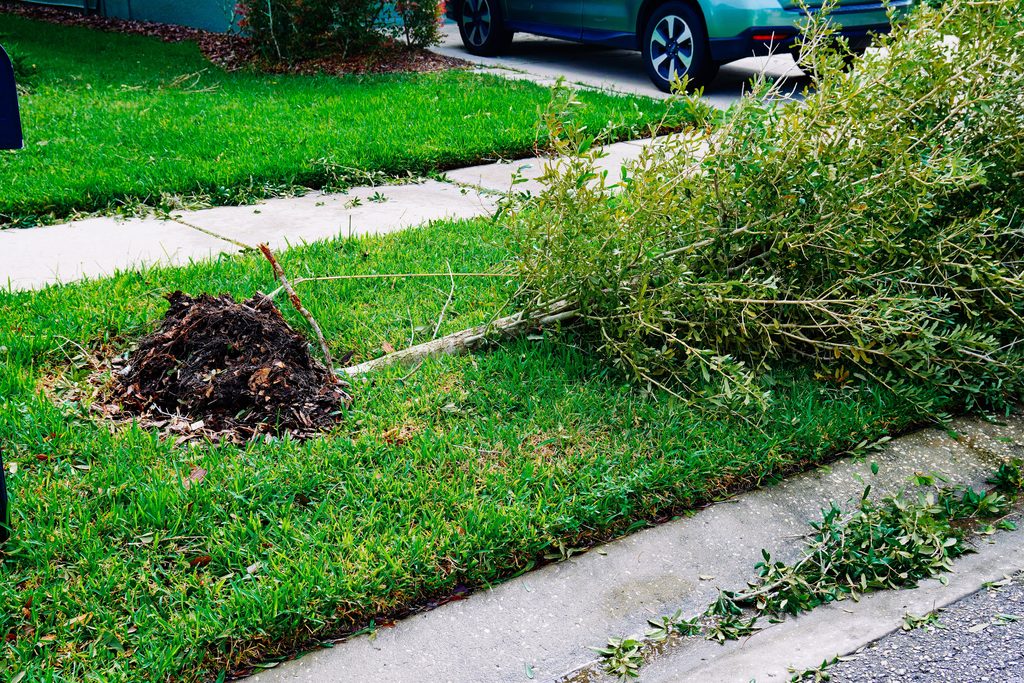
Branches and thick layers of wet leaves can block sunlight and keep grass covered. Leaving a debris pile on living turf while you work elsewhere can create an additional damaged spot.
Start with manageable material you can reach safely. Use a light touch when lifting leaves or small branches so you do not pull out grass or churn up soft soil.
For larger cleanup jobs, plan where material will be gathered and how it will leave the property. Use existing firm access routes where possible. Avoid repeatedly dragging heavy branches across a recovering section of lawn.
Large fallen trees, unstable limbs, and debris near utilities need specialist help. Routine lawn cleanup and hazardous tree work are different jobs, and the right crew depends on what is on the property.
Once the covering material is removed, you can see the turf more clearly and judge what additional care is needed.
Have Mud, Sand, and Erosion Assessed
A storm can leave grass buried beneath a layer of material that was not there before. Thick deposits can block sunlight and interfere with recovery, even if the grass underneath survived the flooding.
UF/IFAS recommends removing deposited mud or silt rather than simply washing it into the soil. The aim is to uncover living grass without scraping away the turf beneath it.
For a substantial deposit, get help deciding how to remove it and where to place it. Flood deposits may contain unwanted material, and moving them carelessly can spread the problem or damage more lawn.
Where water has carried soil away, check the extent of erosion before adding replacement soil or sod. Exposed turf roots, washed-out edges, and depressions may require more than a surface tidy-up.
If the exposed roots belong to a tree or the ground around it has shifted, have the tree assessed separately. Do not assume that filling a hole makes a storm-damaged tree stable.
Give Saturated Ground a Break
For ordinary rainwater flooding, pause unnecessary irrigation while the soil is already wet. Keep foot traffic light and delay mowing until the ground can support equipment without deep impressions or ruts.
The top of the grass can dry before the soil underneath is ready.
UF/IFAS information on soil compaction explains that heavy equipment on very wet ground can make compaction worse. Packing the soil during cleanup can leave roots and drainage facing another challenge after the storm has passed.
Check the areas where mower wheels will travel, especially low spots and turns. If the ground remains soft, wait rather than making repeated passes to tidy the lawn.
Saltwater flooding needs the separate assessment discussed earlier. Recovery may involve carefully managed freshwater flushing, so a blanket “leave everything alone until it dries” approach does not fit every storm-damaged yard.
Check Irrigation Before Returning to Your Routine
Storm debris, moving soil, and cleanup equipment can damage irrigation components. Once conditions are safe, look for displaced heads, broken parts, exposed lines, and unusual wet spots.
Check the controller as well. Confirm its settings rather than assuming it is following the program you remember. Arrange repairs where needed instead of letting a damaged zone repeatedly run.
If storm surge or another source of saltwater may have affected irrigation water, have its suitability checked before using it on the lawn. Adding unsuitable water can work against the recovery you are trying to support.
As rain-soaked soil dries, reassess the lawn’s moisture needs. Pausing unnecessary watering after a storm does not mean leaving irrigation off indefinitely. Resume appropriate watering based on conditions and the requirements that apply to your property.
Resume Mowing and Assess What Needs Repair
Before the first mowing, inspect the lawn again for sticks, stones, and other material that could be hidden in the grass. Use a sharp blade and the recommended cutting height for your grass variety.
UF/IFAS mowing tips recommend removing no more than one-third of the blade in a cut. If storm delays have left the lawn overgrown, bring it back toward the proper height gradually instead of cutting it unusually short.
Monitor damaged areas as routine care resumes. Encouraging signs include firmer ground, healthier new blades, and patches that stop expanding. There is no single recovery deadline for every flooded lawn.
Grass recovery depends on the species, how long flooding lasted, root health, temperature, and any salt exposure.
Dead sections may need suitable plugs or sod, while living grass may begin filling in once its growing conditions improve.
UF/IFAS renovation information emphasizes identifying the cause before replacing damaged turf. Avoid adding fertilizer or several treatments simply to speed things up; choose additional care based on an identified need.
When It Is Time to Call a Lawn Care Professional
Get help when standing water keeps returning, discoloration spreads, roots remain exposed, or the lawn continues thinning after conditions improve. Significant erosion, thick deposits, and suspected salt exposure also deserve a closer assessment.
For example, a patch that remains weak after debris is removed may have more than one problem.
A professional can help distinguish maintenance issues from concerns that need drainage expertise, testing, or disease identification.
Our team here at Cape Coral Lawn Care offers lawn cleanup services to help with fallen branches, debris, and preparing the yard for recovery. Tell us what the storm left behind so we can discuss the cleanup needs and appropriate next steps.
Our guide to storm cleanup in Cape Coral and restoring your lawn after severe weather provides additional information. Local experience matters when considering how coastal exposure, recurring rain, and different soil conditions affect a Cape Coral property.
Get Help With Storm Cleanup and Lawn Recovery in Cape Coral
A Florida storm can leave a mix of flooded grass, washed-out soil, salt exposure, and covering debris. Check what happened in each area, address urgent problems, and let the lawn’s condition guide the cleanup and return to maintenance.
Has severe weather left your yard covered in debris or your grass struggling to recover? Our team here at Cape Coral Lawn Care can discuss your lawn care and cleanup needs and help you choose a practical next step. Contact our team today to get started on caring for your Cape Coral yard after the storm.
FAQs
Q: How do Florida storms affect your lawn?
A: Storms can flood grass, wash away soil, deposit mud or sand, and leave covering debris. Prolonged wet conditions can stress roots and favor some lawn diseases. Coastal flooding may also introduce saltwater.
Q: Can flooded grass recover after a Florida storm?
A: Some can recover after water drains and suitable growing conditions return. Recovery depends on grass type, flooding duration, root health, temperature, and salt exposure. Dead grass will need repair or replacement.
Q: Why does my lawn have standing water after a storm?
A: Low spots, compacted soil, grading, or limited drainage pathways may contribute. Temporary puddles after an extreme storm differ from areas that repeatedly stay wet after nearby ground dries.
Q: Should I mow my lawn after a Florida storm?
A: Wait until the ground is firm enough to support the mower and the blades are dry enough to cut properly. Remove debris first, and avoid mowing if the equipment would create ruts or disturb soaked soil.