Planting a tree is often the easy part. Choosing one that will thrive in Florida for years to come is the real challenge.
For Cape Coral homeowners, trees need to handle more than sunshine. They may face sandy soil, summer downpours, dry stretches, salt exposure, high humidity, and hurricane season.
A tree that looks beautiful at the nursery may not be the best fit for your yard, especially if it cannot handle local growing conditions.
That’s why choosing the best trees to plant in Florida starts with understanding your property, not just picking the prettiest tree on the lot.
In this guide, we’ll look at Florida trees that tend to perform best in Cape Coral, why some trees struggle, and what you can do to give new trees the best chance to grow strong, healthy, and resilient.
Why Choosing the Right Tree Matters in Florida
Florida is a great place to grow trees, but it is not always an easy place.
Cape Coral landscapes often deal with:
- Sandy soil that drains quickly
- Heavy seasonal rainfall
- Hot summer temperatures
- Occasional drought stress
- Coastal salt exposure
- Strong winds during storm season
- Limited planting space in smaller yards
When a tree isn’t suited to local conditions, problems can show up quickly. You may see slow growth, yellowing leaves, weak branches, root problems, disease issues, or repeated storm damage.
A well-chosen tree, planted in the proper location, can do the opposite. It can provide shade, improve curb appeal, support wildlife, reduce heat around the home, and become a long-term part of your landscape.
UF/IFAS also notes that strategic tree placement can help with home energy savings by shading areas around the house. You can learn more from their guide to planting trees for energy savings.
In other words, a good tree choice can pay off for years. A poor choice can become an expensive maintenance problem.
Common Reasons Trees Can Struggle or Fail
Many tree problems begin before the tree is ever planted.
A homeowner may choose a tree because it looks nice, grows quickly, or was recommended somewhere online. But if the tree is wrong for the site, even good care may not be enough.
Common reasons trees struggle include:
- Planting a tree that needs richer soil than the yard provides
- Choosing trees that cannot tolerate sandy soil
- Planting large trees too close to homes, driveways, patios, or fences
- Selecting trees that are sensitive to salt exposure
- Planting too deeply
- Damaging or circling roots during planting
- Overwatering or underwatering during establishment
- Ignoring mature height and spread
This is especially important with Florida trees because many species can grow much larger than homeowners expect. A small nursery tree may eventually become a 50-foot shade tree with a wide root system and broad canopy.
When planting in sandy soil, the goal is to choose species that can establish strong roots even when water and nutrients move through the soil quickly. Sandy soil is common in many Florida landscapes, but not every tree handles it well.
Tree health depends heavily on site selection. If the tree has enough room, the right sunlight, suitable soil, and proper watering during establishment, it has a much better chance of thriving long term.
Trees That Thrive in Cape Coral’s Growing Conditions
There is no single perfect tree for every Florida yard. The best choice depends on your space, sun exposure, soil, maintenance goals, and how close you are to coastal conditions.
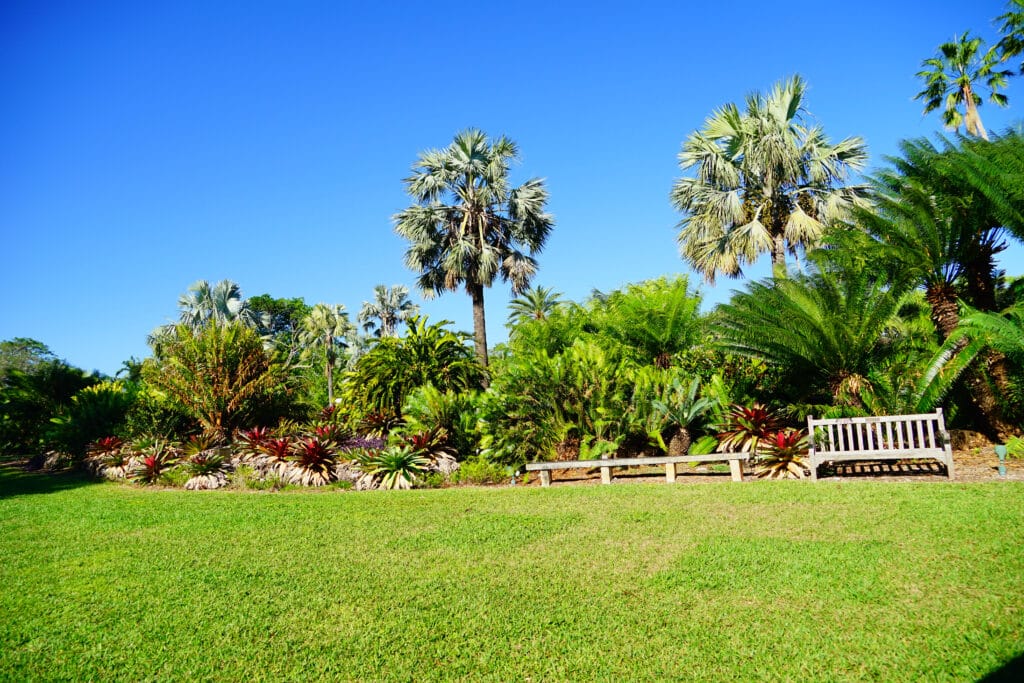
Still, several trees are commonly suited for Florida landscapes and can be strong options for Cape Coral properties when planted in the right location.
Live Oak
Live oak is one of Florida’s most popular shade trees.
It is known for:
- Broad, beautiful shade
- Strong visual character
- Long life span
- Wildlife value
- Good wind resistance when healthy and properly maintained
Live oaks can become stunning centerpiece trees, but they need space. This is not a tree to squeeze into a narrow side yard or plant too close to the house. Mature live oaks can spread widely, so planning matters.
The Florida Department of Environmental Protection includes live oak among Florida’s iconic trees, noting its long-standing role in Florida landscapes.
For Cape Coral homeowners with enough room, live oak can be an excellent long-term shade tree.
Southern Magnolia
Southern magnolia is another beautiful Florida-friendly option, especially for homeowners who want an evergreen tree with large glossy leaves and fragrant white flowers.
Benefits include:
- Attractive flowers
- Evergreen foliage
- Strong ornamental value
- Dense shade
- Classic Southern appearance
Southern magnolias can grow large, so they need room to develop naturally. They are best placed where falling leaves and seed pods will not become a constant cleanup issue near patios, pools, or walkways.
They can be a wonderful landscape tree, but they are not always the lowest-maintenance choice for tight spaces.
Gumbo Limbo
Gumbo limbo is a strong option for many South Florida landscapes.
It is often appreciated for:
- Salt tolerance
- Drought tolerance once established
- Wind tolerance
- Attractive reddish peeling bark
- Tropical appearance
For Cape Coral homeowners looking for salt tolerant trees, gumbo limbo may be worth considering, especially in warmer coastal areas. It grows quickly and can provide a relaxed tropical look.
Like any fast-growing tree, gumbo limbo needs thoughtful placement, enough room to mature, and occasional care to stay healthy..
Crape Myrtle
Crape myrtle is a popular ornamental tree because of its colorful blooms and manageable size.
Homeowners often like it because it offers:
- Seasonal flowers
- A smaller mature size than many shade trees
- Good drought tolerance once established
- Attractive bark
- Flexible use in residential landscapes
Crape myrtle can work well in yards where a huge shade tree would be too large. It is often used near driveways, front yards, or landscape beds where homeowners want color without overwhelming the space.
It still needs proper pruning. Over-pruning can weaken its natural shape, so occasional professional trimming may be useful.
Sabal Palm
The sabal palm is Florida’s state tree and one of the most recognizable landscape choices in the state.
It is valued for:
- Salt tolerance
- Drought tolerance once established
- Wind resistance
- Low maintenance needs
- Native Florida character
Sabal palms are often good choices for Cape Coral landscapes because they handle many local conditions well. They are also generally more resilient than many overly manicured or poorly adapted palm species.
That said, palms should not be aggressively “hurricane cut.” Removing too many fronds can stress the palm rather than help it.
What Makes a Tree Well-Suited for Florida?
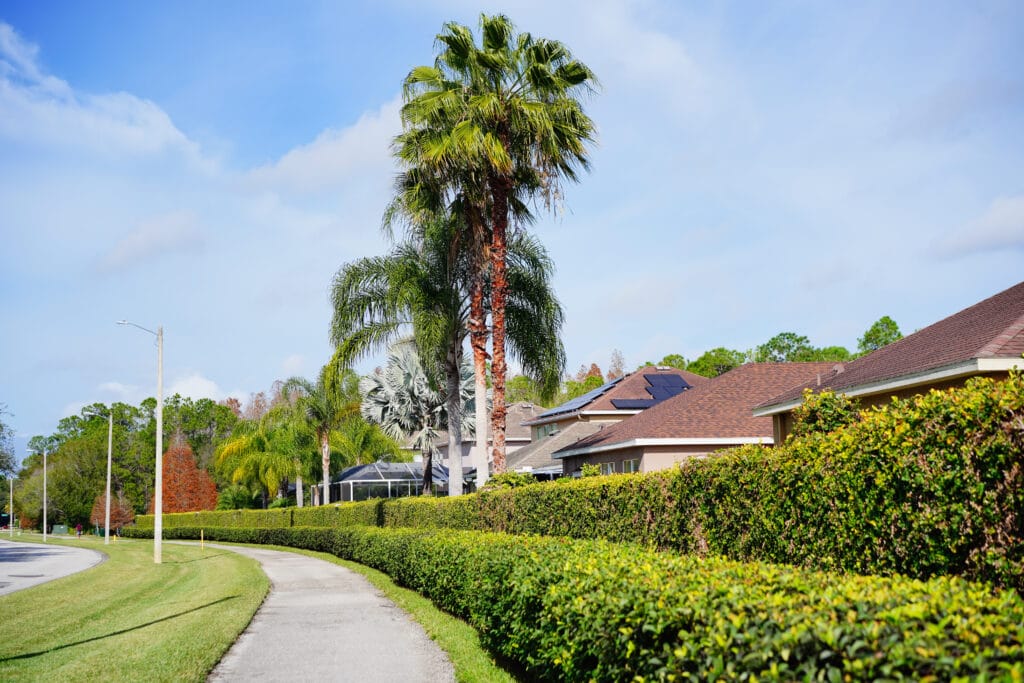
Trees that thrive in Florida typically share several important characteristics.
The best choices often include:
- Drought tolerance
- Salt tolerance
- Strong root structure
- Adaptability to sandy soil
- Good wind resistance
- Reasonable maintenance needs
- Mature size that fits the property
- Compatibility with local sun and drainage conditions
Native and Florida-adapted trees are often more successful because they are already suited to the region’s weather and soil patterns. That does not mean every native tree is right for every yard, but it does mean homeowners should give serious attention to species that naturally tolerate Florida’s conditions.
The Florida-Friendly Landscaping program emphasizes matching plants to the site through its FFL home landscapes guidance. That “right plant, right place” idea is especially important with trees because trees are long-term investments.
For example:
- A sunny front yard may need a drought-tolerant shade tree.
- A coastal property may need salt tolerant trees.
- A small yard may need compact ornamental trees.
- A larger property may have room for live oak or magnolia.
- A low-maintenance landscape may benefit from native or Florida-adapted species.
Choosing the right tree is only one part of a successful landscape. Explore our guide to low-maintenance landscaping in Florida for more ideas that work well in Florida’s growing conditions.
How to Give Your Tree the Best Chance to Succeed
Once you choose a good tree, the next step is planting and caring for it correctly.
A common mistake is choosing the fastest-growing tree available. Fast-growing trees can be appealing because homeowners want shade quickly, but speed is not everything.
Before planting, think about:
- How tall the tree will get
- How wide the canopy will spread
- How large the root system may become
- How close it will be to the home
- Whether it may interfere with power lines
- How much pruning it will need
- Whether it can handle storm season
- Whether it fits your long-term landscape plan
Even low-maintenance trees require the right planting location to stay easy to care for. A tree planted too close to a structure may require constant pruning. A tree planted in the wrong light may struggle. A tree with aggressive roots may become a problem near sidewalks or driveways.
Placement can also help with comfort and energy use. Shade trees placed thoughtfully around a home can reduce heat, especially near windows, walls, and outdoor living spaces.
This is where landscape planning matters. The best trees to plant in Florida are not just attractive. They fit the yard, support the home, and make sense for long-term care.
How Proper Care Helps Trees Stay Healthy
Even resilient trees need help getting established.
Newly planted trees are more vulnerable than mature trees because their roots have not yet grown into the surrounding soil. The first months after planting are especially important.
Good tree care includes:
- Watering consistently during establishment
- Mulching around the base without piling mulch against the trunk
- Keeping grass and weeds from crowding the root zone
- Monitoring leaves for signs of stress
- Checking for leaning, damage, or pest issues
- Avoiding unnecessary pruning while the tree is adjusting
Mulch is especially helpful in Florida because it helps conserve moisture, reduce weeds, and protect the soil surface. Just avoid the common “mulch volcano” mistake. Mulch should be spread in a wide, shallow ring, not piled against the trunk.
Pruning also matters. Young trees may need structural pruning to develop strong branch patterns. Established trees may need occasional maintenance to remove dead, damaged, or crossing branches.
If you are unsure when or how to prune, our guide to tree and shrub trimming near me explains what homeowners should know before trimming landscape plants.
Good tree maintenance is not about constantly cutting. It is about helping the tree grow strong, balanced, and healthy over time.
What About Hurricane Resistant Trees?
No tree is completely hurricane-proof.
However, some hurricane resistant trees are generally considered better suited for wind than weak-wooded or poorly rooted species. Trees with strong structure, healthy root systems, and proper pruning tend to perform better during storms.
Live oak, gumbo limbo, and sabal palm are often discussed as better options for Florida storm resilience when they are healthy and planted correctly.
Storm resilience depends on several factors:
- Species selection
- Root health
- Soil conditions
- Canopy structure
- Age of the tree
- Previous pruning practices
- Available rooting space
A strong tree can still fail if it is planted too deeply, crowded by pavement, weakened by disease, or poorly pruned. That is why hurricane resistance should be part of the decision, but not the only factor.
Need Help Choosing the Best Trees for Your Cape Coral Yard?
Successful tree planting starts with choosing a species that can handle Florida’s growing conditions– not just one that looks good at the nursery, hardware store, or big-box retailer.
Cape Coral homeowners should think about sandy soil, salt exposure, drought periods, mature size, maintenance needs, and storm resilience before planting.
The right tree can become a beautiful, functional part of your landscape for decades. The wrong tree can become a costly replacement project.
Are you looking for the best trees for your Cape Coral property? Contact our helpful team here at Cape Coral Lawn Care today for expert guidance on tree selection, planting, and landscape care designed for Florida conditions.
FAQs
Q: What are the best trees to plant in Florida?
A: Some of the most popular choices include live oak, southern magnolia, gumbo limbo, sabal palm, and crape myrtle because they adapt well to many Florida growing conditions.
Q: What trees grow well in sandy soil?
A: Many Florida-adapted trees, including live oak and sabal palm, can tolerate sandy soil once established. The best choice depends on sunlight, space, drainage, and location.
Q: What are some hurricane resistant trees?
A: Trees with strong root systems and good wind resistance, such as live oak, gumbo limbo, and sabal palm, are often considered more storm-resilient than weak-wooded species.
Q: What are the best low maintenance trees for Florida?
A: Native and Florida-friendly species are often lower maintenance because they are adapted to local weather, soil, and growing conditions.