
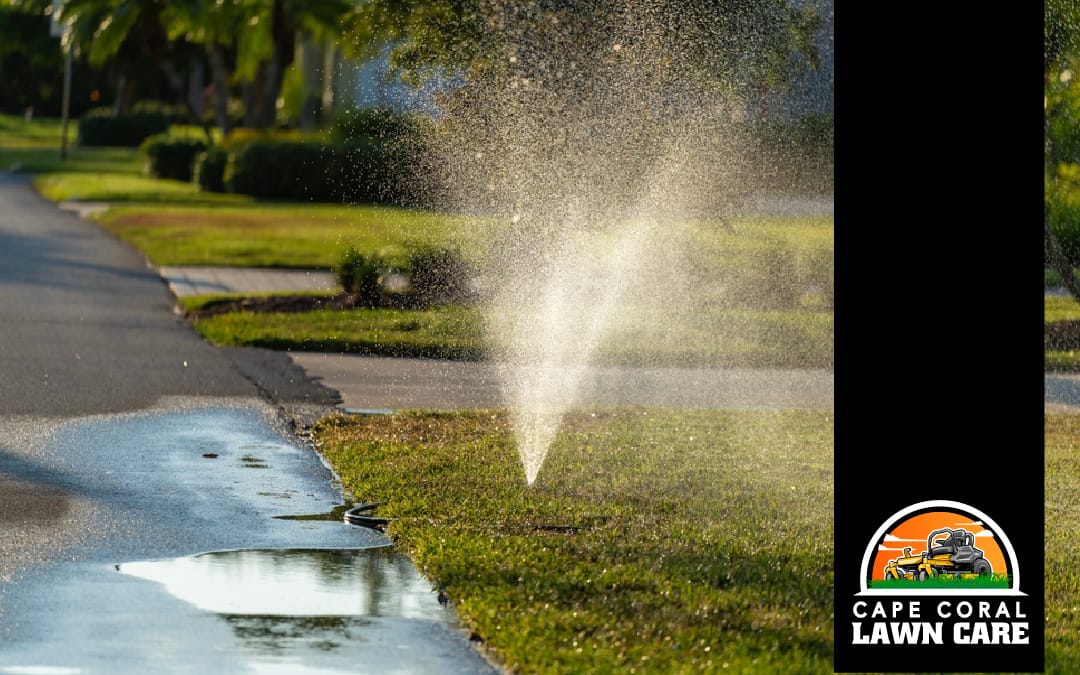
We all know watering your lawn is important– but how much water does your grass actually need?
That question can get a little complicated in Cape Coral. One week can bring hot, dry weather that leaves you worried your grass isn’t getting enough moisture. The next can bring several heavy rainstorms that leave the ground saturated. It’s easy to leave the sprinkler timer exactly where it is and assume a little extra water can’t hurt.
Unfortunately, it can.
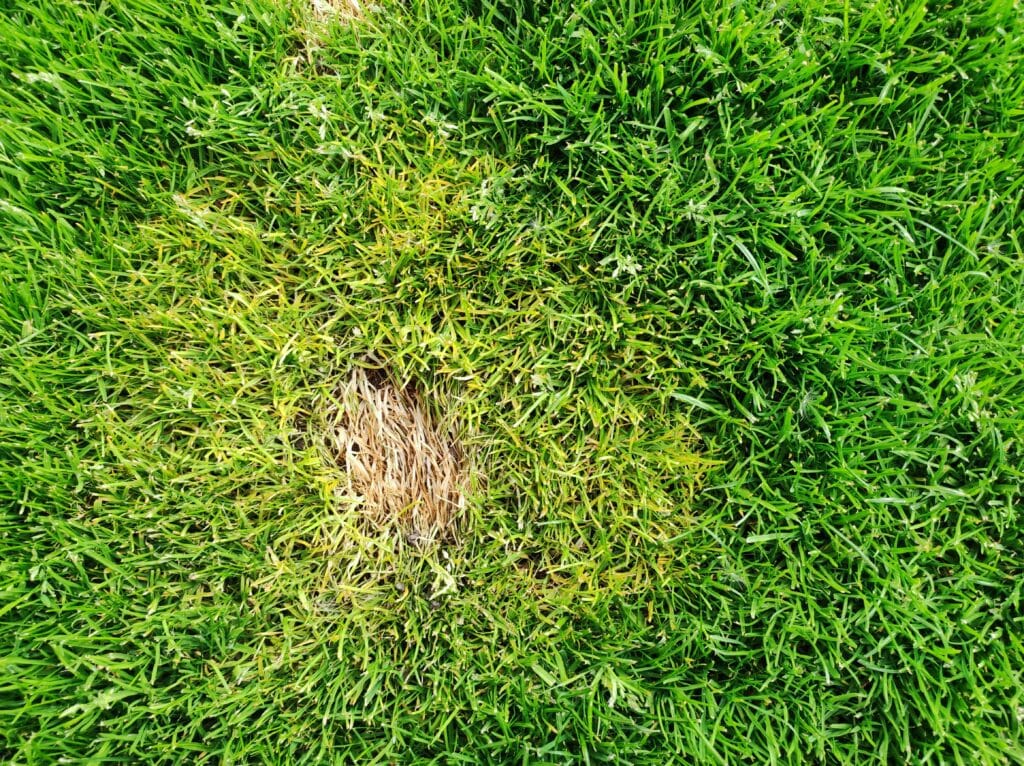
Overwatering your lawn can cause many of the same symptoms homeowners associate with drought, including yellow grass, thinning turf, weak growth, and brown patches. The difference is that adding even more moisture may make those problems worse.
Healthy grass needs moisture, but its roots need oxygen, too. When soil stays wet for too long, roots can become weaker, disease pressure can increase, and your lawn may struggle despite all the attention you’re giving it.
In this guide, we’ll show you how to recognize an overwatered lawn, explain why Cape Coral’s soil and weather make smart watering especially important, and walk through practical ways to create a healthier lawn watering routine.
Why Too Much Water Can Hurt Your Lawn
Grass needs water to survive, but roots do not want to sit in constantly saturated soil.
Healthy soil contains both moisture and air. Those small air spaces allow oxygen to reach the root system, helping the grass absorb nutrients and grow normally.
When the lawn receives water too frequently, those spaces may remain filled with moisture. Roots get less oxygen, and the turf can begin to struggle.
Overwatering may contribute to:
- Shallow root development
- Weak or thinning grass
- Increased weed pressure
- Fungal disease
- Excessive thatch and growth
- Reduced drought tolerance
- Nutrient loss below the root zone
- Standing water and runoff
The University of Georgia Cooperative Extension explains in its article, When Irrigating Lawns, Too Much Water Can Be Too Much of a Good Thing, that excessive irrigation can create shallow root systems and make turf less tolerant of drought while also increasing disease, weed, and insect problems.
That shallow-root issue is especially important.
When you water lightly every day, the upper layer of soil stays moist. Grass roots have little reason to grow deeper because water is always available near the surface.
That may sound harmless until a hot, dry stretch hits Cape Coral.
Shallow roots dry out much faster than deeper ones. Suddenly the lawn that seemed well-watered becomes stressed almost immediately when irrigation is reduced or temperatures climb.
Deeper watering at appropriate intervals encourages roots to follow moisture farther into the soil. Over time, that can create a more resilient lawn.
More Water Isn’t Always the Answer to Brown Grass
One of the easiest mistakes to make is assuming every brown or yellow patch needs more moisture..
You see a dry-looking patch.
You turn on the sprinklers.
The grass still looks bad.
So you water again.
But discoloration can have many causes, including:
- Too much water
- Too little water
- Fungal disease
- Chinch bugs or other pests
- Nutrient deficiencies
- Root damage
- Soil compaction
- Poor drainage
- Fertilizer burn
- Uneven irrigation coverage
If the actual problem is saturated soil or fungus, increasing irrigation can make conditions even more favorable for damage.
Before touching the sprinkler timer, check the soil. Is it actually dry?
That simple question can save you from turning a small lawn problem into a much larger one.
Signs Your Lawn May Be Getting Too Much Water
An overwatered lawn usually gives you clues.
The problem is that those signs can look a lot like a lawn that needs more water.. Watch for these common symptoms of overwatered grass.
Soggy or Spongy Soil
Walk across the lawn after the irrigation system has been off for a while. Does the ground still feel unusually soft? Does water squeeze up around your shoes? Does the soil feel muddy even though it hasn’t recently rained?
Those are signs that moisture may not be draining or drying properly.
Standing Water
Puddles that remain long after irrigation stops are another warning sign.
A small amount of temporary pooling during a heavy storm is one thing. Areas that repeatedly collect water after ordinary irrigation suggest either excessive watering or lawn drainage issues that need attention.
Yellowing Grass
Too much water can cause grass to lose its healthy green color.
Roots growing in excessively wet soil may struggle to take in oxygen and nutrients. The lawn can begin looking pale, yellow, weak, or uneven.
This is why yellow grass should never automatically trigger another round of irrigation.
Thin or Weak Growth
A lawn can receive plenty of water and still look thin.
Constant moisture may encourage shallow roots and weaker turf, leaving the grass less resilient when conditions change.
You may notice individual blades growing poorly or bare soil beginning to show between patches.
Mushrooms and Fungal Activity
An occasional mushroom after heavy rain does not necessarily mean something is wrong.
But repeated mushroom growth or fungal problems can indicate that areas of the lawn are staying damp for extended periods.
Warm weather plus constant moisture is an invitation for many turfgrass diseases.
Increased Weed Problems
Certain weeds thrive in overly wet conditions.
If areas that receive the most irrigation also seem to be developing more weeds, examine whether those zones are getting too much water.
Runoff Onto Sidewalks or Streets
If water is flowing from your lawn onto the driveway, sidewalk, or street, the ground may be receiving water faster than it can absorb it.
That water is doing your grass very little good.
Instead of reaching the root zone, it’s leaving the property.
Before assuming an unhealthy-looking lawn is thirsty, take a minute to check the soil, irrigation coverage, recent rainfall, and drainage.
Cape Coral’s Soil and Watering Needs Are Different
Cape Coral homeowners face an interesting contradiction.
Much of the area has sandy soil, and sandy soil drains quickly. That can make it seem logical to water more frequently.
But quick drainage does not mean daily irrigation is automatically good for the grass.
Sand contains relatively large particles with open spaces between them. Water moves through those spaces faster than it would through heavier clay-rich soil.
That means Cape Coral lawns may lose available moisture relatively quickly– but frequent shallow watering can still train the grass to develop shallow roots.
The goal is not to keep the upper inch of soil permanently wet.
The goal is to deliver enough water to reach the active root zone and then allow the lawn to use that moisture before watering again.
Our guide on how sandy soil affects lawn growth in Cape Coral explains why sandy ground loses both moisture and nutrients quickly and why stronger root development matters so much for Cape Coral lawns.
This is where good Florida lawn care becomes less about following a timer and more about observing the property.
Two lawns in Cape Coral may behave differently even if they are located on the same street.
- One may have loose, fast-draining sand.
- Another may contain compacted fill soil.
- One yard may get full sun from morning until evening.
- Another may stay shaded for half the day.
- One irrigation zone may drain perfectly.
- Another may collect water because of grading or compaction.
Your lawn watering routine should respond to what is actually happening in your yard.
Follow a Watering Schedule Instead of Guessing
A consistent lawn watering schedule can make lawn care easier– as long as you don’t treat it like a set-it-and-forget-it system.
Cape Coral has local irrigation rules, and those rules matter. They help manage water use while giving homeowners an organized framework for irrigation.
You can learn more in our guide to the Cape Coral watering schedule.
Because local watering restrictions can change based on water conditions, location, and water source, homeowners should also verify the current City of Cape Coral requirements rather than assuming last year’s schedule still applies.
Once you know when you’re permitted to irrigate, the next step is deciding whether the lawn actually needs water.
Rain counts, too.
If Cape Coral gets a soaking rain on the day before your normal irrigation time, your lawn may already have received what it needs.
Running the sprinklers anyway does not make the lawn twice as healthy.
It can simply make the soil wetter.
A rain sensor, soil moisture sensor, or smart irrigation controller can make these adjustments easier. But even without technology, homeowners can learn a lot by simply checking the lawn before watering.
Let the Grass Tell You When It’s Thirsty
Don’t rely on the calendar alone. Pay attention to how your lawn is actually responding.
Grass that genuinely needs water may show:
- Blades folding or curling
- A slightly blue-gray tint
- Footprints that remain visible after walking across the lawn
- Grass that does not spring upright as quickly
- Dry soil within the root zone
These signs indicate actual moisture stress more reliably than surface appearance alone.
North Carolina’s Department of Environmental Quality offers a useful overview of this approach in its guide to watering your lawn. The exact water needs differ by climate and soil, but the principle is valuable: water enough to reach the root zone, then wait until the lawn begins showing that it needs moisture again.
How Much Water Is Actually Reaching Your Lawn?
One reason homeowners accidentally overwater is that sprinkler run time does not tell you how much water the lawn is receiving.
Thirty minutes from one sprinkler system may deliver a completely different amount than thirty minutes from another.
Sprinkler heads vary by:
- Type
- Water pressure
- Nozzle
- Spray pattern
- Spacing
- System age
- Zone design
Instead of assuming a certain number of minutes is correct, measure the actual output.
Try the Catch-Can Test
This is a simple homeowner test.
Place several straight-sided containers, such as empty tuna cans, across one irrigation zone.
Run that zone for a set amount of time.
Then compare how much water collected in each container.
This simple test can tell you two things:
- Roughly how much water your sprinkler system applies during that period.
- Whether the zone is distributing water evenly.
If one container is nearly full while another is barely wet, you may have a coverage problem.
The answer is not necessarily to run the entire system longer.
You may need to adjust a sprinkler head, clear an obstruction, correct pressure, or repair part of the system.
Measuring output takes some of the guesswork out of lawn watering.
How to Prevent Overwatering Your Florida Lawn
You don’t need a complicated irrigation system to avoid overwatering your lawn.
Start with a few practical habits.
Check the Soil Before Watering
Push a screwdriver, soil probe, or small garden tool into the ground.
If the root zone is still moist, irrigation may not be necessary yet.
If the tool struggles to enter the ground, compaction may be affecting water movement.
This quick test helps distinguish a dry lawn from a drainage or soil problem.
Account for Rainfall
Cape Coral’s rainfall can change quickly, particularly during the wet season.
Do not let the irrigation system duplicate what the weather has already done.
Pause or reduce scheduled irrigation when the lawn has received substantial rain.
Check Every Irrigation Zone
Turn your sprinklers on and walk the property.
Look for:
- Broken sprinkler heads
- Heads spraying sidewalks or driveways
- Clogged nozzles
- Uneven coverage
- Water hitting fences or walls
- Puddles forming in one area
- Dry spots receiving very little water
An irrigation system that is poorly calibrated can overwater one portion of the yard while underwatering another.
Water the Root Zone, Not Just the Surface
Frequent shallow watering keeps the upper soil wet but does little to encourage deep roots.
When appropriate for your turf and current local restrictions, watering deeply enough to reach the root zone and then allowing time between irrigation events generally supports stronger roots than constant light watering.
Water Earlier Rather Than Later
Early-morning irrigation allows water to reach the soil while evaporation is relatively low.
It also gives grass blades time to dry as the day warms.
Keeping foliage wet for long periods, particularly overnight, can create more favorable conditions for fungal problems.
Adjust for the Season
A lawn does not necessarily need the same irrigation in January that it needs during a hot, dry period.
Temperature, rainfall, day length, grass growth, and humidity all affect water use.
Your irrigation program should change when your lawn’s needs change.
Don’t Forget About Drainage
You can have a perfectly programmed sprinkler system and still end up with an overwatered lawn if the property does not drain properly.
Lawn drainage issues can cause water to collect in certain areas even when the rest of the yard drains quickly.
This can happen because of:
- Low spots
- Compacted soil
- Improper grading
- Downspout runoff
- Irrigation leaks
- Hardscape directing water toward turf
- Soil differences across the property
Remember: Cape Coral may be known for sandy soil, but that does not mean every square foot of every property drains identically.
Construction can change soil structure. Foot traffic can compact certain areas. Driveways, patios, pools, and landscape beds can alter how water moves through the yard.
One section may dry almost immediately after rain while another stays saturated for days.
That is why a watering schedule cannot fix every moisture problem.
Signs You May Have a Drainage Problem
Look for:
- Puddles that repeatedly appear in the same area
- Grass that stays soggy after the surrounding lawn dries
- Muddy areas after normal irrigation
- Yellow or thinning turf in low spots
- Persistent fungus or mushrooms
- Water flowing toward the foundation
- Erosion in other areas of the yard
If these symptoms continue after irrigation has been reduced, drainage may need to be addressed directly.
That could mean correcting grading, reducing compaction, redirecting water, repairing irrigation, or making other site-specific changes.
Professional evaluation can be valuable here because drainage problems are not always obvious from the surface.
Overwatering Can Waste More Than Water
Water waste is probably the first thing that comes to mind when you think about overwatering, but there’s another downside that’s easy to miss: you may also be washing away some of the nutrients your lawn needs.
Cape Coral’s sandy soil drains quickly, so when too much water moves through the ground, fertilizer can travel below the root zone before your grass has a chance to use it. That can leave you wondering why the lawn still looks weak even though you’ve already fertilized.
It’s easy to assume the answer is adding more fertilizer, but sometimes the watering routine is the real issue. Before reaching for another lawn product, check how often you’re watering and how wet the soil already is.
A simple irrigation adjustment may help your grass make better use of the nutrients that are already there– and save you from spending money on fertilizer you don’t actually need.
What Overwatering Can Look Like Compared With Underwatering
These two problems can be surprisingly easy to confuse.
An Underwatered Lawn May Show:
- Folded or curled blades
- Blue-gray turf
- Visible footprints that linger
- Dry soil
- Grass becoming brittle
- Browning during extended drought
An Overwatered Lawn May Show:
- Constantly soggy soil
- Yellowing grass
- Soft or weak growth
- Standing water
- Fungal activity
- Mushrooms
- Shallow roots
- Runoff
- Weed growth associated with wet conditions
Brown patches can appear in either situation.
That is why you should never diagnose the problem based on color alone.
- Check the soil
- Look at recent rainfall
- Inspect irrigation
- Pay attention to drainage
- Then make the adjustment
A Simple Watering Routine for Cape Coral Homeowners
If keeping track of everything feels like a lot, simplify it.
Before irrigating, ask four questions:
1. Has It Rained Recently?
If yes, determine whether the lawn still needs supplemental water.
2. Is the Root Zone Actually Dry?
Check below the surface rather than judging only by color.
3. Is the Grass Showing Moisture Stress?
Look for folding blades, lingering footprints, or a blue-gray appearance.
4. Am I Allowed to Irrigate Today?
Check the current Cape Coral watering rules that apply to your property and water source.
If the lawn does need water, irrigate efficiently and watch for runoff or pooling.
This routine takes only a few minutes and is much more useful than letting an automatic timer make every decision.
Give Your Lawn What It Needs… Not More
Water is essential to a healthy Florida lawn.
But healthy watering is about balance.
Too little moisture stresses the grass. Too much moisture can weaken roots, encourage fungal problems, waste nutrients, increase weeds, and create a lawn that becomes increasingly dependent on frequent irrigation.
Cape Coral’s sandy soil adds another layer to the challenge because water moves through it quickly. That makes it even more important to understand your individual property instead of assuming that frequent watering is automatically necessary.
Follow the current lawn watering schedule, account for rainfall, check your irrigation system, and pay attention to what your lawn is telling you.
Small adjustments now can prevent much larger lawn problems later.
Not Sure If You’re Overwatering Your Lawn?
If you are seeing yellow grass, soggy areas, standing water, or a lawn that just does not seem to improve despite regular watering, your irrigation routine may be part of the problem.
Not sure if you’re overwatering your lawn? Our team here at Cape Coral Lawn Care can help you figure out what your grass needs and identify watering, drainage, or maintenance problems that may be affecting your yard.
Contact us here at Cape Coral Lawn Care today to get started and build a healthier watering routine for your Cape Coral lawn.
FAQs
Q: How do I know if I’m overwatering my lawn?
A: Look for soggy soil, standing water, yellowing grass, weak or thinning growth, recurring fungal issues, mushrooms, or areas that remain wet long after irrigation stops. Check the soil before assuming the grass needs more water.
Q: How often should I water my lawn in Cape Coral?
A: It depends on rainfall, grass type, soil conditions, the season, your irrigation system, and the current Cape Coral watering rules that apply to your property. Rather than watering automatically, follow local requirements and adjust when rainfall has already provided enough moisture.
Q: Can overwatering cause brown grass?
A: Yes. Too much water can weaken roots, reduce oxygen around the root system, and create conditions that encourage disease. These problems can eventually produce yellow or brown patches that may look similar to drought stress.
Q: Does sandy soil affect how I should water my lawn?
A: Yes. Sandy soil drains quickly and generally holds less moisture than heavier soils, but that does not mean more frequent watering is always better. Watering appropriately to reach the active root zone while avoiding constant shallow irrigation can help encourage stronger root development.